SKF FAG NSK Bearings Wholesale Supplier: Cheap vs Premium Teardown

SKF FAG NSK Bearings Wholesale Supplier: Cheap vs Premium Teardown
The cheapest bearing on the invoice is often the most expensive component in your maintenance budget.
Premium bearings justify their higher upfront cost through superior metallurgy and precision manufacturing, which drastically reduces unplanned downtime compared to cheap alternatives. While generic options may appear identical externally, teardown analysis consistently reveals critical differences in cage integrity, raceway finish, and material purity that dictate operational lifespan. For industrial buyers, verifying these internal qualities through traceability documentation and authorized sourcing is the only reliable method to avoid catastrophic failure in harsh environments.
I still remember the dust choking the air at a quarry site near Riyadh. The ambient temperature hovered near fifty degrees Celsius, and the machinery was screaming under load. The owner had saved a significant margin by purchasing a batch of non-branded spherical roller bearings from a local trader. Within three months, the production line halted. When we cracked open the failed units, the cages were not just worn; they were shattered.*nt had turned into abrasive sludge. That incident reinforced a hard truth I have observed across decades in the Middle East and beyond: you cannot negotiate with physics. [NEED_CITE: impact of operating temperature on bearing steel hardness]
This reality drives the need for a deeper understanding of what lies beneath the seal. Let us look at what a teardown actually reveals and why it matters for your procurement strategy.
What Does a Teardown Actually Reveal?
Internal material quality and cage construction dictate lifespan, not just external appearance.
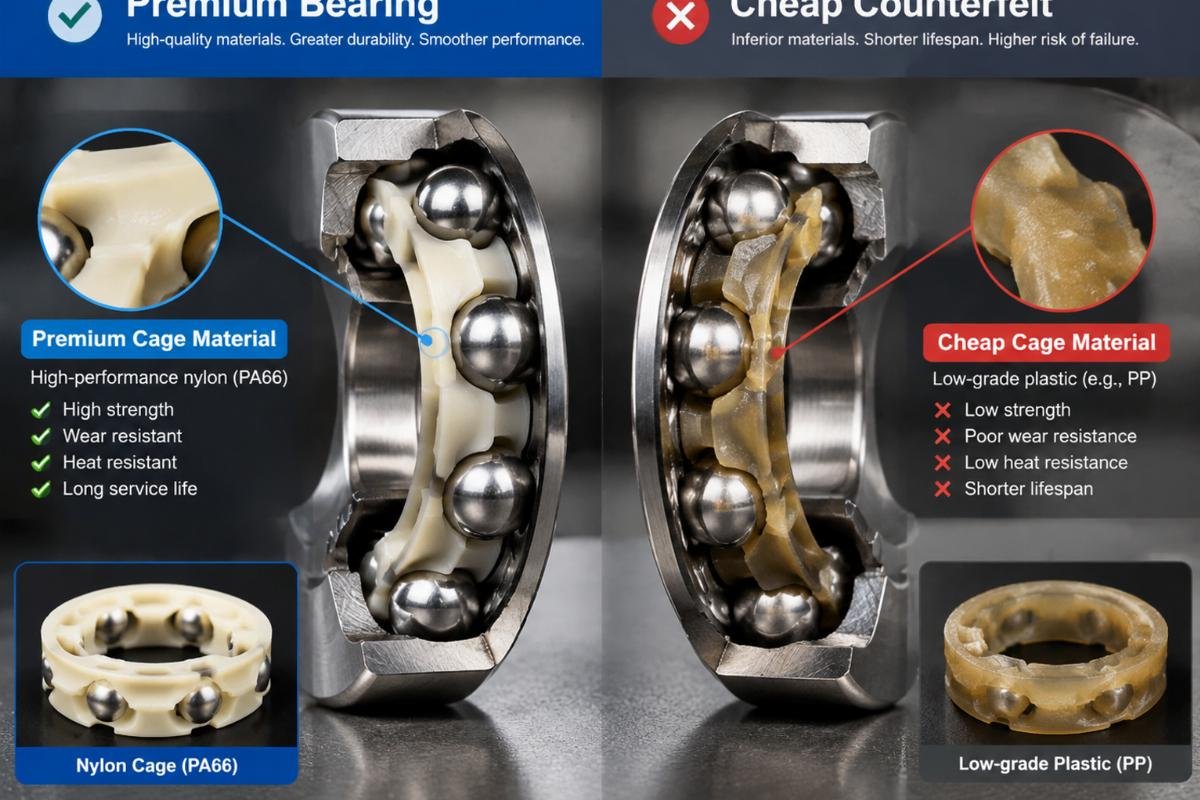
When you hold a cheap bearing next to a premium unit like an SKF or FAG product, they often feel similar in weight and size. However, a teardown exposes the fundamental disparities in engineering philosophy. The primary difference lies in the steel purity and the manufacturing precision of the rolling elements.
Premium manufacturers use vacuum-degassed steel to minimize oxygen and non-metallic inclusions. These microscopic impurities act as stress concentrators, initiating fatigue cracks long before the expected service life ends. In contrast, budget manufacturers often use standard commercial-grade steel with higher inclusion density. [NEED_CITE: effect of steel purity on rolling contact fatigue life]
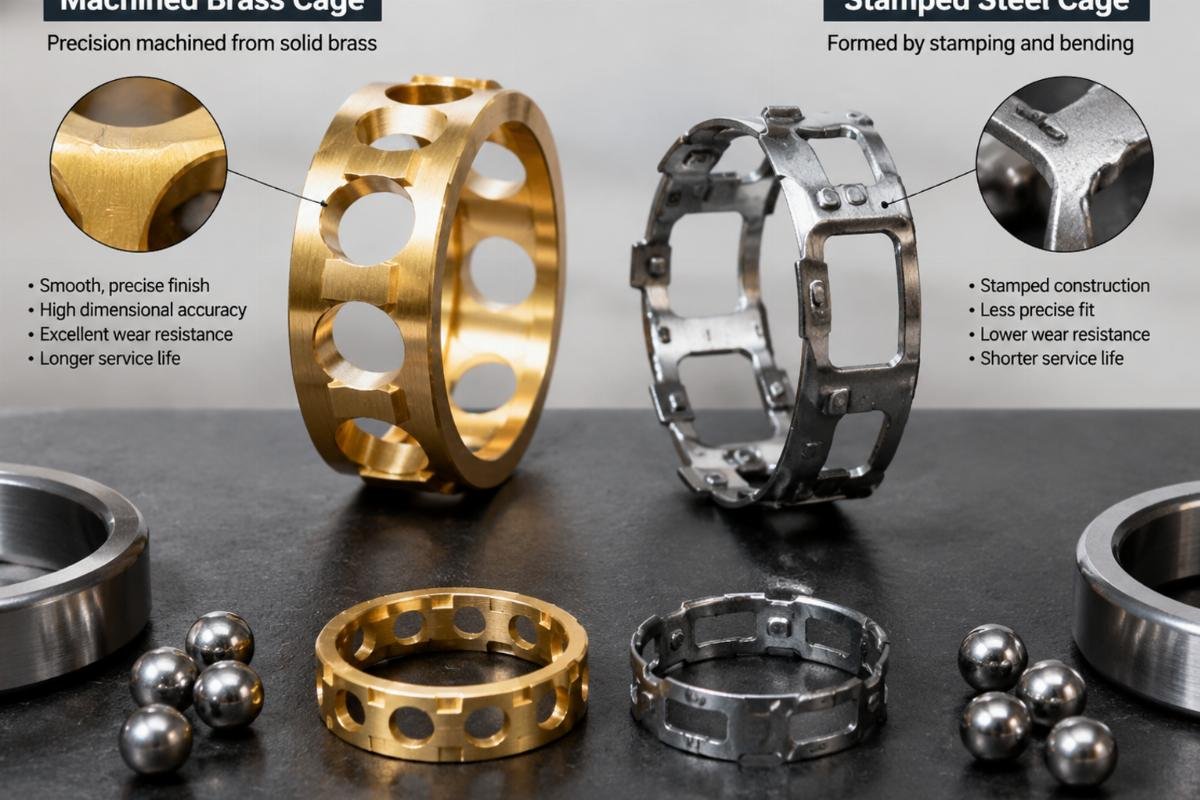
The cage is another critical failure point. In high-speed or high-vibration applications, the cage maintains the spacing of the rolling elements. Premium bearings utilize machined brass or high-strength polymer cages designed to withstand centrifugal forces and thermal expansion. Cheap alternatives frequently use stamped steel cages that are prone to fracture under shock loads. During a recent inspection of a failed batch from a Southeast Asian textile mill, we found that the stamped cages had deformed, causing the rollers to skew and seize. This type of catastrophic failure is rare in premium units, which tend to wear predictably over time.
Understanding these internal components helps buyers move beyond price-based decisions. It shifts the focus to value-based procurement, where the goal is to secure components that match the operational demands of the machinery.
How Do Cheap and Premium Bearings Fail Differently?
Premium bearings exhibit predictable wear patterns, while cheap bearings fail catastrophically under load.
The mode of failure tells a story about the quality of the component. In my experience supporting MRO teams in mining and heavy industry, the difference in failure modes is stark. Premium bearings typically fail due to normal fatigue after exceeding their calculated L10 life. You might see spalling on the raceways or gentle wear on the rolling elements. This gives maintenance teams warning signs such as increased vibration or noise, allowing for scheduled replacement during planned shutdowns.
Cheap bearings, however, often fail without warning. This is known as infant mortality or premature failure. Common modes include cage fragmentation, raceway cracking due to poor heat treatment, and immediate seizure from inadequate lubrication retention. [NEED_CITE: common failure modes per ISO 15243 classification]
Consider a case from a cement plant in North Africa. A critical crusher application experienced repeated failures every few weeks using generic bearings. The maintenance team assumed it was a lubrication issue. After switching to premium tapered roller bearings and conducting a root cause analysis, we found that the generic units were suffering from micro-cracking due to insufficient case hardening depth. The premium units, with their controlled heat treatment processes, handled the shock loads effectively. The shift from reactive emergency repairs to predictive maintenance saved the plant substantial downtime costs.
| Failure Characteristic | Premium Bearing Behavior | Cheap/Generic Bearing Behavior |
|---|---|---|
| Cage Integrity | Maintains shape under thermal stress | Prone to deformation or fracture |
| Raceway Surface | Smooth wear progression | Micro-cracking and spalling |
| Failure Warning | Gradual increase in vibration/noise | Sudden seizure or catastrophic break |
| Lubricant Retention | Effective sealing and channel design | Poor retention leading to dry running |
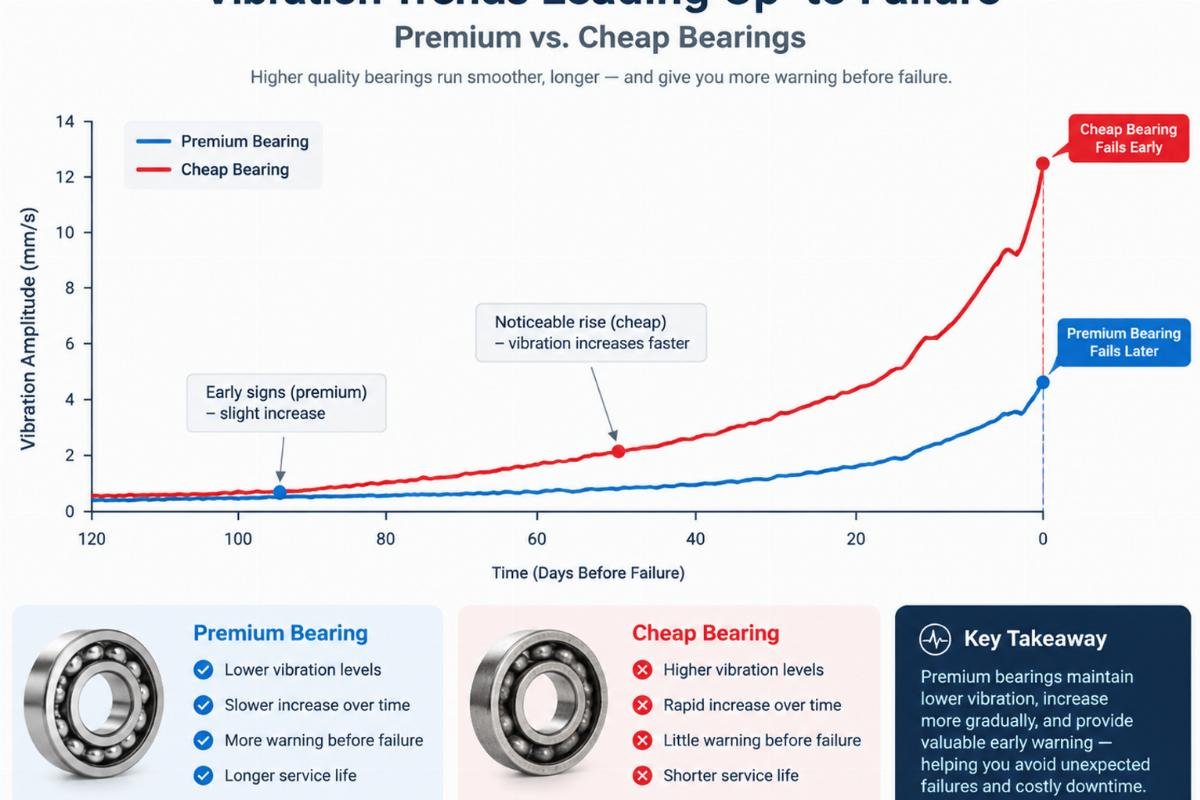
This distinction is vital for operations where unplanned downtime carries a heavy penalty. The predictability of premium bearings allows for better planning and resource allocation.
How to Calculate the True Cost of Ownership?
Factoring in downtime and replacement labor makes premium bearings cheaper in the long term.
Many procurement officers focus solely on the purchase price variance between a generic and a premium bearing. This narrow view ignores the total cost of ownership (TCO). The real cost of a bearing includes the price of the unit, the labor for installation, the cost of lost production during downtime, and the collateral damage to surrounding components.
In heavy industry, the cost of downtime can dwarf the price of the bearing itself. A single hour of halted production in a steel mill or an automated assembly line can cost tens of thousands of dollars. If a cheap bearing fails prematurely, triggering an unscheduled stop, the savings from the initial purchase are wiped out instantly. [NEED_CITE: average cost of unplanned downtime in manufacturing sectors]
Let us look at the hidden costs. When a bearing seizes, it often damages the shaft, housing, or coupling. Replacing these components requires additional parts, specialized labor, and extended downtime. Premium bearings, with their superior dimensional stability and load-carrying capacity, protect these adjacent assets. Furthermore, the frequency of replacement is lower. Instead of changing a bearing four times a year, a premium unit might last several years, reducing labor hours and inventory management complexity.
For distributors and wholesalers, educating end-users on TCO is a powerful sales tool. It shifts the conversation from price negotiation to value justification. By presenting data on reduced maintenance intervals and increased reliability, you help clients see the economic logic behind investing in quality.

This perspective aligns the interests of the supplier and the buyer, fostering long-term partnerships based on mutual success rather than transactional pricing.
How Can Buyers Verify Premium Bearings Before Purchase?
Demand traceability documents, packaging checks, and authorized supplier audits to ensure authenticity.
The market is flooded with counterfeit bearings that mimic the packaging and branding of premium manufacturers like SKF, FAG, and NSK. These fakes often look convincing but lack the internal quality controls of genuine products. For buyers, verification is not just a best practice; it is a necessity to protect their operations and reputation.
Start with the documentation. Genuine premium bearings come with full traceability, including batch numbers, material certificates, and proof of origin. Authorized suppliers can provide these documents upon request. If a supplier hesitates or provides vague answers, it is a red flag. [NEED_CITE: importance of supply chain traceability in preventing counterfeits]
Next, inspect the packaging. Premium brands invest heavily in anti-counterfeit features, such as holographic labels, specific font styles, and high-quality printing. Counterfeiters often miss these subtle details. Check for spelling errors, blurry logos, or flimsy box materials.
Finally, audit your supplier. A reliable partner will have direct relationships with manufacturers or authorized distributors. They should be able to explain their sourcing channels and quality assurance processes. In our operations, we maintain strict controls to ensure that every unit of SKF, FAG, or NSK bearing we supply is genuine. We offer mixed-brand consolidation services, allowing buyers to source various premium brands from a single trusted source, reducing the risk of encountering counterfeit goods from multiple unknown vendors.

By implementing these verification steps, buyers can secure their supply chain and ensure they are receiving the quality they pay for. This diligence protects against the severe consequences of installing fake components in critical machinery.
Conclusion
Quality is not an expense; it is an investment in operational continuity.
Choosing between cheap and premium bearings is a decision that impacts more than just the procurement budget. It affects the reliability, safety, and profitability of your entire operation. Through teardown insights, we see that premium bearings offer superior materials, predictable failure modes, and long-term cost savings. By prioritizing verification and understanding the true cost of ownership, buyers can make informed decisions that support sustainable industrial performance. Trust in verified sources and demand transparency to ensure your machinery runs on genuine quality.
Need a quote for the bearings in this article?
Send your part numbers and get price, stock and lead time within 4 hours.

Written by
authorEditor covering global sourcing, supplier verification, and industrial product knowledge. Content is compiled from manufacturer specifications, industry standards, and hands-on experience with international B2B buyers. Every article is fact-checked before publishing to help procurement professionals make informed decisions.
View all posts

