SNL SN SD FSNL Plummer Block Housings Wholesale Supplier

SNL SN SD FSNL Plummer Block Housings Wholesale Supplier
Heavier cast iron does not guarantee stability.
Selecting the correct plummer block housing series—SNL, SN, SD, or FSNL—depends primarily on base machining precision, sealing compatibility, and specific load conditions rather than shaft diameter alone. MRO buyers and distributors must prioritize base flatness tolerances and bolt-hole positional accuracy to prevent field failures such as vibration-induced bearing seizures and premature seal degradation. The choice between a standard two-bolt SNL and a four-bolt FSNL or heavy-duty SD series dictates the operational lifespan of the assembly in harsh industrial environments.
I still recall the chill of a Chicago warehouse during a major MRO exhibition years ago. I had secured what seemed like a bargain batch of standard SNL housings for a client’s crusher upgrade. The price was right, and the weight felt substantial in hand. However, I had neglected to verify the base casting quality and machining tolerances. When the client installed them, the assemblies vibrated excessively within hours of operation. The entire batch was rejected, resulting in a financial loss that far exceeded the initial savings. That incident shifted my focus from gross weight to microscopic details. Now, when I evaluate Plummer Block Housings SNL SN SD FSNL, I look at the mating surface flatness and the precision of the seal grooves first. [NEED_CITE: impact of base flatness on bearing alignment and vibration]
This guide breaks down the technical distinctions between these series to help you avoid costly mistakes. We will examine why base precision matters more than mass, how seal mismatches lead to early failure, and what verification steps are essential before committing to bulk purchases.
What are the core differences between SNL, SN, SD, and FSNL?
Not all split pillow blocks are created equal; the bolt configuration and load rating define their application scope.
The primary distinction lies in the structural design and intended load capacity. SNL and SN series are typically two-bolt housings designed for standard applications with moderate loads. They are widely used due to their interchangeability and ease of installation. However, the SNL series often features improved sealing options compared to older SN designs. [NEED_CITE: historical evolution of SNL vs SN housing standards]
In contrast, the FSNL series introduces a four-bolt base design. This additional fixation points significantly enhance stability, reducing the risk of housing movement under dynamic loads. The SD series is engineered for heavy-duty applications, featuring thicker walls and higher load-carrying capabilities. It is often selected for industries like mining and steel production where shock loads are common.
| Feature | SNL Series | SN Series | FSNL Series | SD Series |
|---|---|---|---|---|
| Bolt Configuration | Two-bolt | Two-bolt | Four-bolt | Two-bolt (Heavy Duty) |
| Base Stability | Standard | Standard | High | Very High |
| Load Capacity | Moderate | Moderate | High | Heavy |
| Sealing Options | Advanced | Basic | Advanced | Robust |
| Typical Application | General Industry | Legacy Replacement | Vibrating Screens | Crushers/Mills |
A distributor in Southeast Asia once substituted standard SNL units for FSNL in a vibrating screen application. The two-bolt design could not withstand the continuous oscillation, leading to loose anchor bolts and misalignment. Switching to the four-bolt FSNL resolved the issue entirely. [NEED_CITE: mechanical stability comparison of two-bolt vs four-bolt housings]
When sourcing Plummer Block Housings SNL SN SD FSNL, understanding these structural differences prevents mismatched replacements. A heavier SD housing might seem like an upgrade for a light-duty fan, but its rigidity can transmit unwanted stress if the mounting surface is not perfectly flat. Conversely, using an SNL in a high-vibration environment without proper locking mechanisms invites failure.

How does base casting precision affect assembly vibration?
Base flatness is more critical than housing weight for preventing vibration.
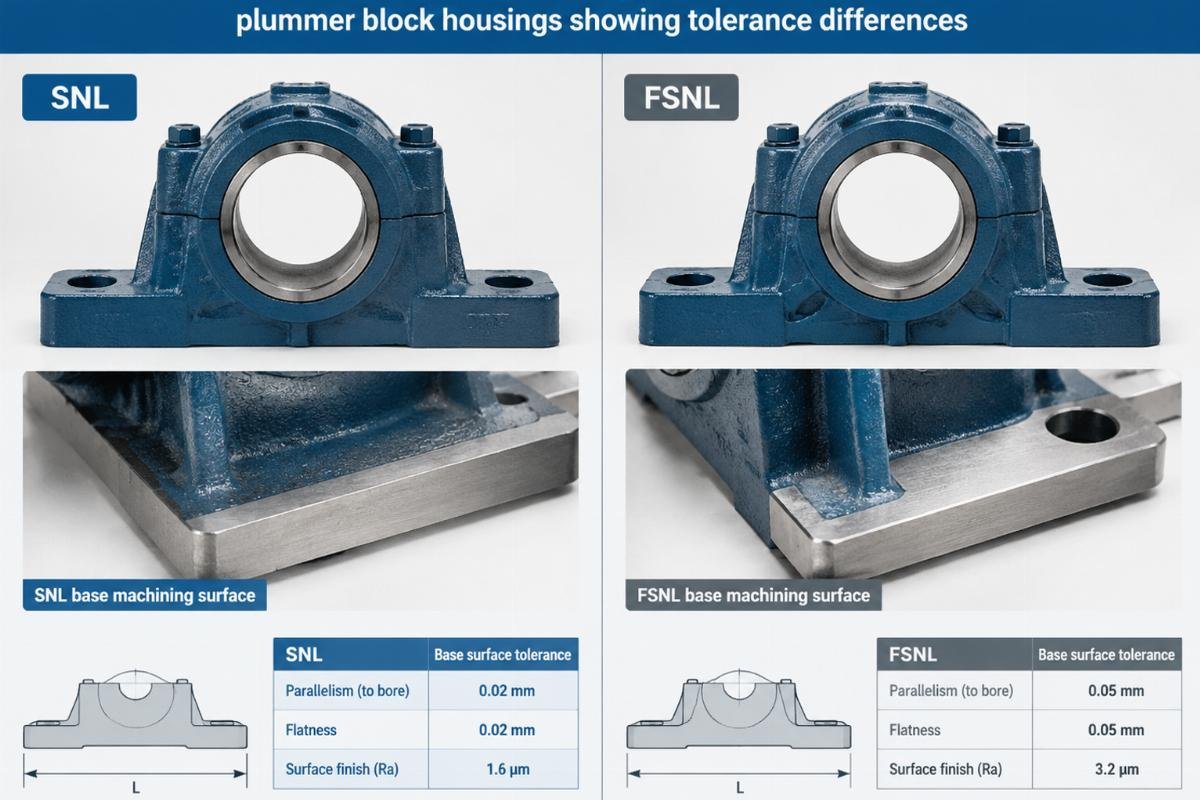
Many buyers assume that a heavier housing absorbs vibration better. In reality, poor base flatness causes the bearing outer ring to distort when the caps are tightened. This distortion leads to internal clearance changes, generating heat and vibration. [NEED_CITE: relationship between housing bore distortion and bearing life]
During a quality audit at a manufacturing facility, we observed that cheap housings had significant deviations in machining tolerance. The base feet were not parallel, causing the shaft to sit at a slight angle. This misalignment forced the spherical roller bearing to operate outside its self-aligning limit, leading to premature wear. The cost of re-machining or replacing these units was substantial.
Key precision indicators include:
- Base Flatness: Ensures even contact with the mounting surface.
- Bore Roundness: Prevents bearing outer ring distortion.
- Bolt-Hole Positional Accuracy: Guarantees proper cap alignment.
[NEED_CITE: ISO standards for plummer block housing machining tolerances]
A European wind farm operator reported that switching to housings with verified micron-level precision reduced assembly vibration noticeably. The initial investment was higher, but the reduction in maintenance downtime justified the cost. This highlights that precision machining is a non-negotiable factor for critical applications.
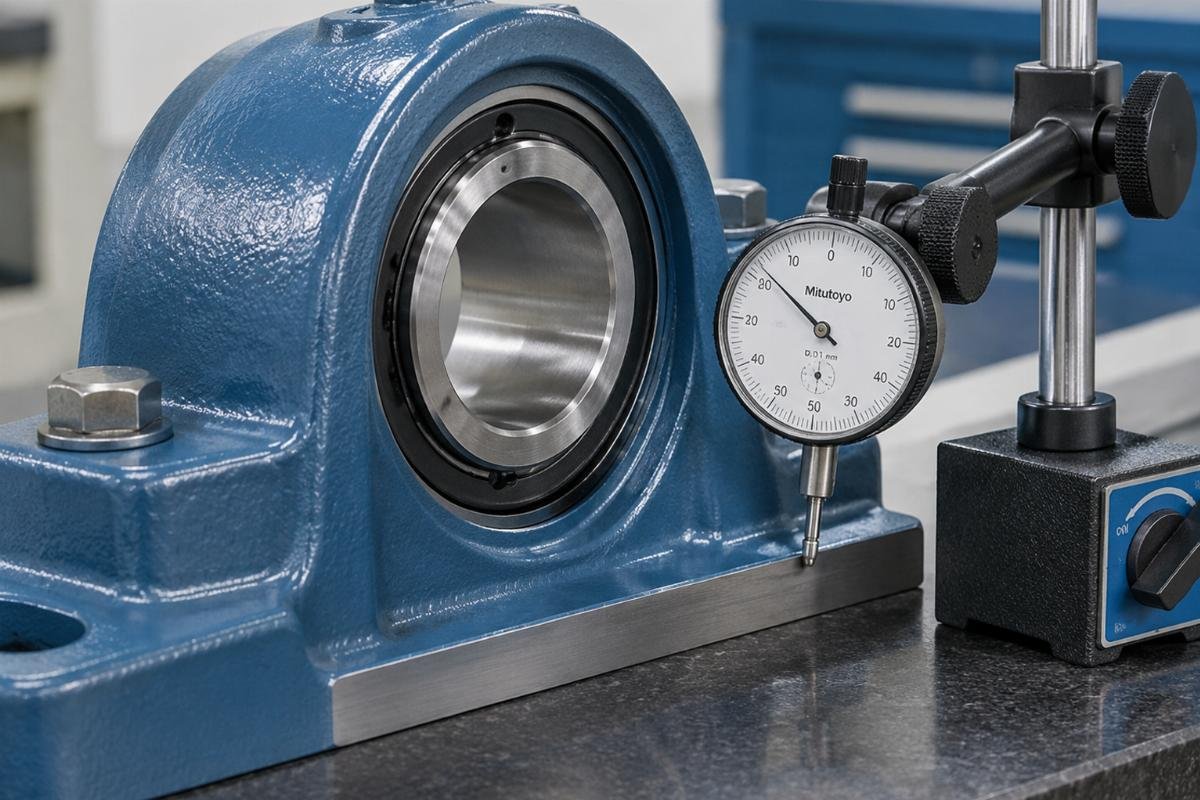
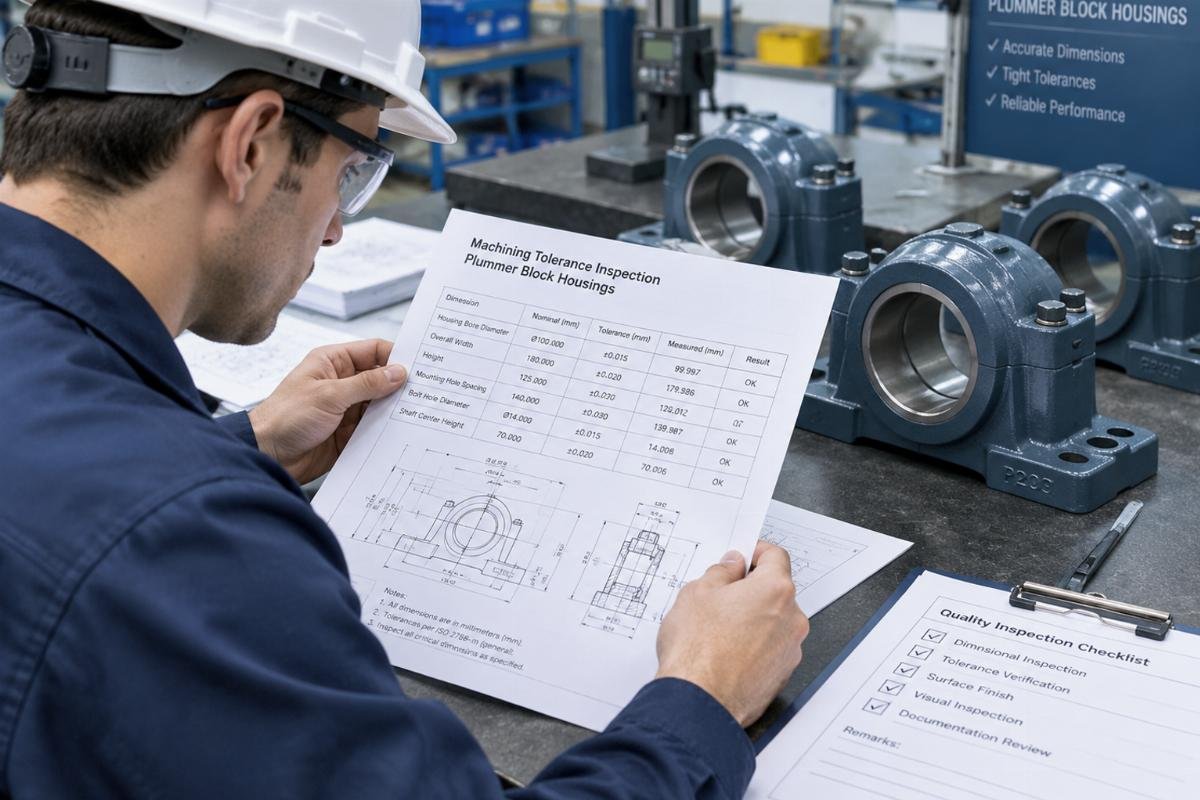
When evaluating Plummer Block Housings SNL SN SD FSNL, request documentation on machining tolerances. Visual inspection is insufficient; certified measurement data is required to ensure the base meets the necessary flatness standards. Without this verification, you risk installing components that are predisposed to failure before they even start running.
Which sealing solution fits your environment?
Standard seals fail rapidly in extreme dust; labyrinth seals are often mandatory.
Seal mismatch is a leading cause of premature bearing seizure. Standard rubber seals used in many SNL housings are effective for general environments but struggle in dusty or moist conditions. In a cement plant case study, standard seals allowed fine dust ingress, causing lubricant contamination and bearing failure within months. [NEED_CITE: failure analysis of bearing seals in dusty environments]
The SD and FSNL series often support more robust sealing options, including labyrinth seals. These non-contact seals create a tortuous path for contaminants, offering superior protection without generating friction heat. For high-temperature or wet environments, specialized seal materials are required to maintain elasticity and integrity.
| Environment | Recommended Seal Type | Housing Compatibility |
|---|---|---|
| Clean/Indoor | Standard Rubber | SNL, SN |
| Dusty/Outdoor | Labyrinth | FSNL, SD |
| Wet/Corrosive | Stainless Steel/Labyrinth | SD, FSNL |
| High Temperature | Heat-Resistant Elastomer | SD, SNL |
A Middle East steel mill experienced repeated failures due to seal degradation in high-heat zones. Switching to housings compatible with high-temperature labyrinth seals extended the service life meaningfully. The key was matching the seal material to the operating temperature and contaminant type, not just the shaft size.
When selecting Plummer Block Housings SNL SN SD FSNL, consider the environmental challenges. Do not rely on standard seals for harsh conditions. Verify the seal groove dimensions and material compatibility with your specific operating parameters. This proactive approach prevents unplanned downtime and reduces long-term maintenance costs.

How to verify housing quality before bulk purchasing?
Traceability and machining certification are more valuable than brand name alone.
Before committing to a large order, verify the quality through rigorous checks. Start by requesting material certificates to confirm the cast iron grade. Poor-quality iron can crack under stress or wear unevenly. Next, review machining tolerance reports. As mentioned earlier, base flatness and bore roundness are critical. [NEED_CITE: importance of material certification for cast iron housings]
We implement strict ISO quality assurance protocols to ensure every batch meets these standards. Complete traceability documentation allows buyers to track the origin and processing history of each unit. This transparency is crucial for MRO buyers who need to justify procurement decisions based on reliability.
Technical support for cross-brand equivalent model consultation ensures that you get genuine, precision-matched housings. Whether you are replacing an obsolete SN series or upgrading to an FSNL, our team provides the technical datasheets needed for accurate selection. This service helps avoid the pitfalls of incompatible dimensions or performance gaps.
A regional distributor in Latin America reduced returns significantly by adopting this verification process. By checking machining certs and testing seal mating before distribution, they ensured only high-quality units reached their clients. This built trust and reduced the administrative burden of handling claims.
When sourcing Plummer Block Housings SNL SN SD FSNL, demand more than just a part number. Ask for proof of precision. Verify the supplier’s ability to provide consistent quality across batches. This diligence protects your reputation and ensures the longevity of the machinery you support.
Conclusion
Precision prevents failure.
Choosing between SNL, SN, SD, and FSNL housings requires a focus on base machining accuracy, sealing suitability, and load requirements. Avoid the trap of judging quality by weight alone. Verify tolerances and seal compatibility to ensure reliable performance in demanding industrial settings. Proper selection of Plummer Block Housings SNL SN SD FSNL safeguards your operations against costly downtime and maintenance issues.
Need a quote for the bearings in this article?
Send your part numbers and get price, stock and lead time within 4 hours.

Written by
authorEditor covering global sourcing, supplier verification, and industrial product knowledge. Content is compiled from manufacturer specifications, industry standards, and hands-on experience with international B2B buyers. Every article is fact-checked before publishing to help procurement professionals make informed decisions.
View all posts