How to Compare Bearing Quotations Apples to Apples

How to Compare Bearing Quotations Apples to Apples
The lowest unit price is often the most expensive mistake in industrial procurement.
To compare bearing quotations apples to apples, buyers must look beyond the base model number and total landed cost. A valid comparison requires a line-by-line analysis of suffix codes for seal materials, internal clearance classes, and cage types, alongside a verification of traceability documentation. Ignoring these technical specifications leads to mismatched performance, premature failure, and hidden replacement costs that far exceed initial savings.
I learned this the hard way during my early days in quality inspection in Qingdao. We prepared a shipment of deep-groove ball bearings for a client in Riyadh. The quotation looked competitive, and the model numbers matched the sample request perfectly. However, I had not scrutinized the suffixes closely enough. The supplier substituted standard clearance with C3 clearance and swapped metal shields for rubber seals without explicit confirmation. Within two weeks of installation, the bearings overheated and seized due to excessive friction from the wrong seal type in a high-speed application. The resulting downtime and replacement costs were multiples of the initial “savings.” That incident reshaped my approach. Now, I know that comparing bearing quotations demands dissecting parameters down to the bone.
This guide breaks down the technical and commercial traps in procurement. By focusing on verifiable data rather than just price tags, you can ensure your sourcing decisions support long-term operational reliability.
Why Do Identical Model Quotes Vary So Much?
Base model numbers are merely the starting point, not the full definition of a bearing’s capability.
When you request a quote for a standard part like a 6205, you might receive prices ranging from budget to premium. This variance is not always arbitrary. It often reflects critical differences hidden in the suffixes. Two bearings with the same base number can have vastly different internal geometries, material grades, and manufacturing tolerances.
A common pitfall is assuming that a lower price indicates a better deal on the same product. In reality, the cheaper option may lack specific treatments or use inferior components that are not immediately visible. For instance, the difference between a standard steel cage and a polymer cage can significantly impact high-speed performance and noise levels. Without decoding these suffixes, you are comparing incomplete data sets.
[NEED_CITE: impact of suffix variations on bearing performance and pricing]
Consider the case of a mixed-brand package order. One supplier offered a significantly lower FOB price. Upon closer inspection, the quote excluded freight and tariffs, which were added later as hidden fees. Another quote appeared higher but included DDP terms and used genuine products with full traceability. The landed cost difference was minimal, but the risk profile was drastically different. The cheaper quote carried the risk of non-genuine parts, which could lead to catastrophic failure in heavy machinery.
To avoid this, always request a detailed breakdown. Ensure that every suffix in the quotation matches your technical requirements. If a supplier cannot explain the meaning of each suffix code, treat the quote with suspicion. Genuine manufacturers and authorized distributors provide transparent documentation that aligns with international standards.

How to Decode Bearing Suffixes in Quotations?
Systematically compare clearance, seal type, and cage materials line by line to ensure functional equivalence.
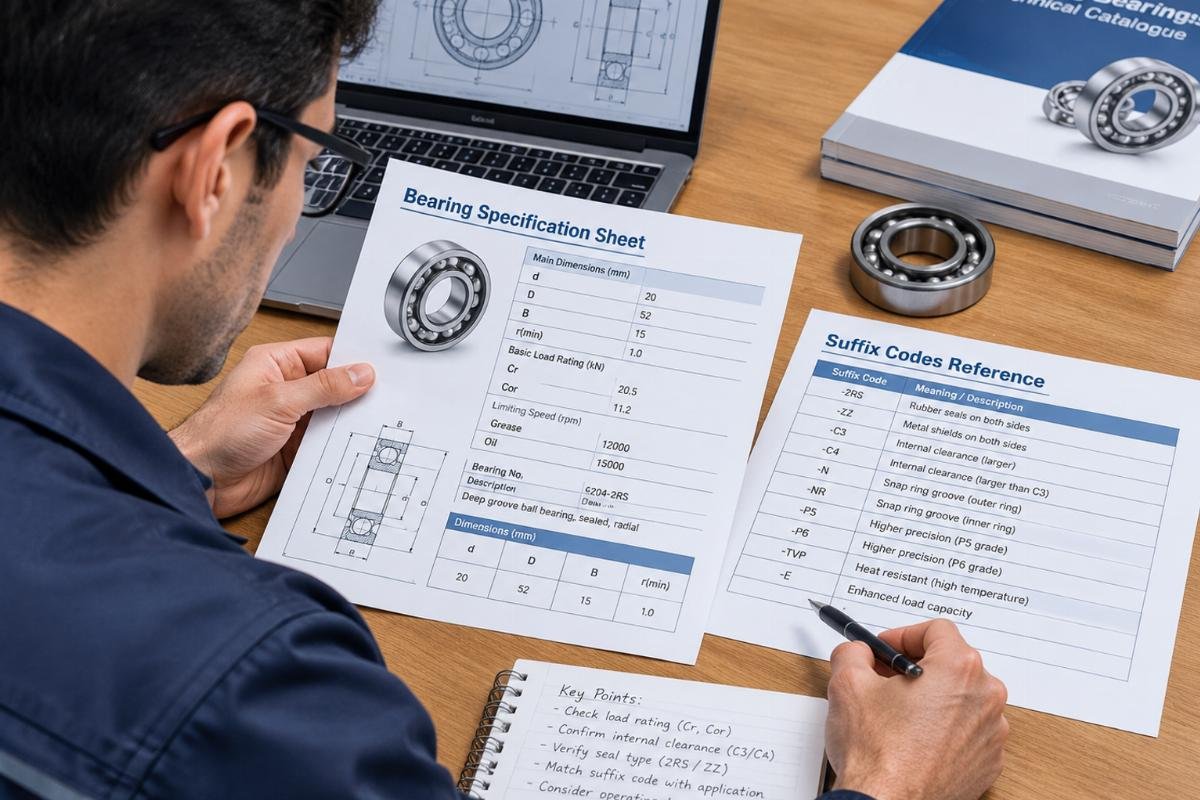
Suffixes are the language of bearing specifications. They define the internal architecture that determines how a bearing performs under load, speed, and temperature. Ignoring them is akin to buying a car without checking the engine type. To compare bearing quotations effectively, you must decode these identifiers.
First, examine the internal clearance. Standard clearance is suitable for most general applications. However, high-temperature environments or applications with significant shaft expansion require C3 or C4 clearance. Using a standard clearance bearing in a high-heat scenario can cause thermal locking, leading to immediate failure. Conversely, using C3 clearance in a precision machine tool can result in excessive vibration and reduced accuracy.
Second, analyze the seal material. Metal shields offer low friction and are suitable for high speeds but provide limited protection against contaminants. Rubber seals provide better sealing against dust and moisture but generate more heat due to friction. A mismatch here can cause dust ingress or overheating, depending on the operating environment.
Third, check the cage material. Steel cages are robust and suitable for heavy loads. Polymer cages are lighter and allow for higher speeds but may degrade in certain chemical environments. Brass cages offer a balance but are more expensive.
| Specification | Standard Option | High-Performance Option | Risk of Mismatch |
|---|---|---|---|
| Internal Clearance | Normal (CN) | C3 / C4 | Thermal locking or vibration |
| Seal Type | Metal Shield (Z) | Rubber Seal (RS/2RS) | Contaminant ingress or overheating |
| Cage Material | Steel | Polymer / Brass | Speed limitation or chemical degradation |
[NEED_CITE: ISO standards for bearing suffix definitions]
A European wind farm operator once faced repeated failures in gearbox bearings. The quotes they received all listed the same base model. However, the failing bearings had standard clearance, while the application required C3 clearance to accommodate thermal expansion. Once they specified the correct suffix in their RFQ, the failures stopped. This highlights the importance of precise suffix matching when you compare bearing quotations.

What Hidden Costs Are Lurking in “Low” Prices?
Cheap quotes often exclude freight, tariffs, or use inferior non-genuine products that inflate total cost of ownership.
The sticker price is only one component of the total cost. When you compare bearing quotations, you must calculate the landed cost, which includes shipping, insurance, duties, and handling. A low FOB quote might seem attractive, but if it excludes freight, the final cost could be higher than a competitor’s DDP quote.
Moreover, low prices can signal compromised quality. Non-genuine bearings may look identical to genuine ones but lack the precise metallurgy and heat treatment required for durability. These counterfeits often fail prematurely, causing unplanned downtime. The cost of replacing a failed bearing in a critical mining crusher, for example, includes not just the part price but also labor, lost production, and potential damage to other components.
[NEED_CITE: total cost of ownership calculations in industrial maintenance]
Another hidden cost is the lack of technical support. Reputable suppliers offer consultation on model selection and failure analysis. Budget suppliers often provide no such service, leaving buyers to troubleshoot issues alone. This can lead to incorrect replacements and recurring problems.
To mitigate these risks, request a comprehensive quote that includes all logistics costs. Verify the authenticity of the products by asking for mill certificates and traceability documents. If a supplier hesitates to provide these, it is a red flag. Investing in genuine products with full documentation ensures reliability and reduces long-term expenses.

How to Verify Authenticity and Traceability?
Demand original mill certificates and traceability documents before finalizing orders to guarantee product integrity.
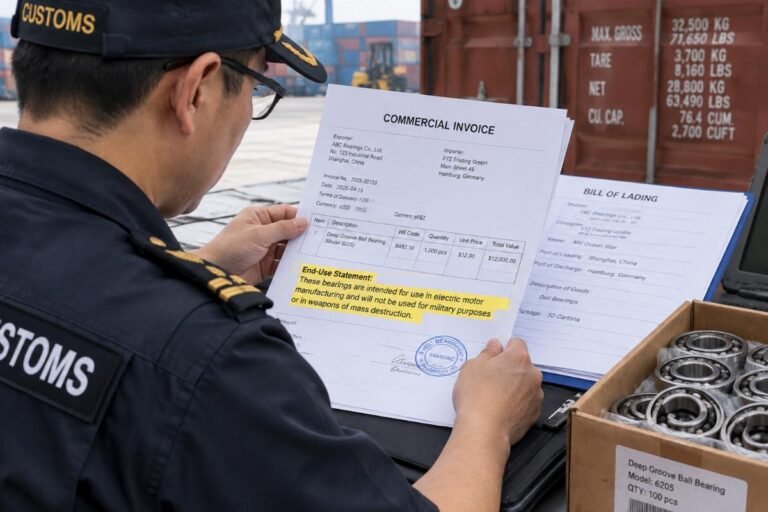
Authenticity is non-negotiable in industrial procurement. Counterfeit bearings pose a severe safety risk and can lead to costly legal liabilities. To verify authenticity, you must go beyond visual inspection. Request original mill certificates that detail the material composition, heat treatment batch, and quality control tests performed by the manufacturer.
Traceability documents allow you to track the bearing from the factory floor to your warehouse. This chain of custody ensures that the product has not been tampered with or substituted during transit. Reputable suppliers maintain rigorous records and can provide these documents upon request.
[NEED_CITE: industry guidelines for bearing authenticity verification]
A Middle East steel mill once received a batch of spherical roller bearings that failed within months. Investigation revealed that the bearings were counterfeit, lacking the proper heat treatment. The supplier could not provide traceability documents, exposing the buyer to significant risk. Since then, the mill mandates strict documentation checks for all purchases.
When you compare bearing quotations, prioritize suppliers who offer transparent traceability. This practice not only ensures quality but also simplifies warranty claims and failure analysis. It is a critical step in protecting your operation from the dangers of substandard components.

Conclusion
Precision in specification prevents expense in operation.
Comparing bearing quotations requires a disciplined approach that prioritizes technical accuracy over initial price. By decoding suffixes, calculating landed costs, and verifying traceability, buyers can avoid hidden traps and ensure reliable performance. This method transforms procurement from a cost-center activity into a strategic advantage for operational stability.
Need a quote for the bearings in this article?
Send your part numbers and get price, stock and lead time within 4 hours.

Written by
authorEditor covering global sourcing, supplier verification, and industrial product knowledge. Content is compiled from manufacturer specifications, industry standards, and hands-on experience with international B2B buyers. Every article is fact-checked before publishing to help procurement professionals make informed decisions.
View all posts