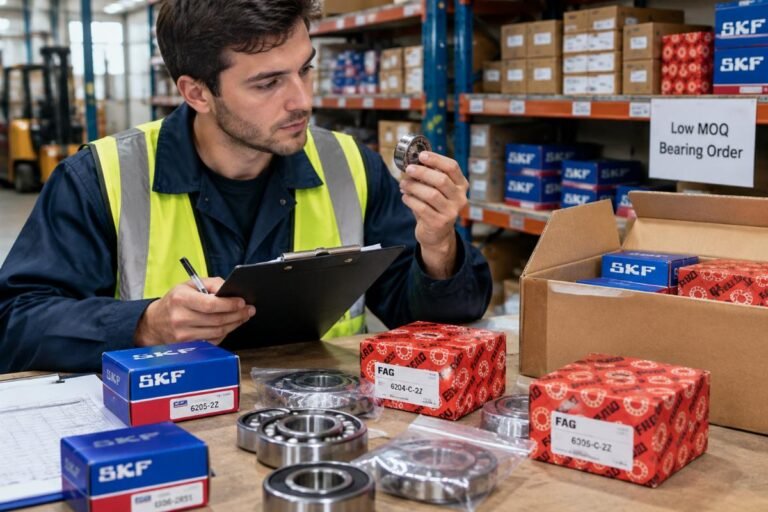
Bearing Export Control: Why End-Use Statements Matter

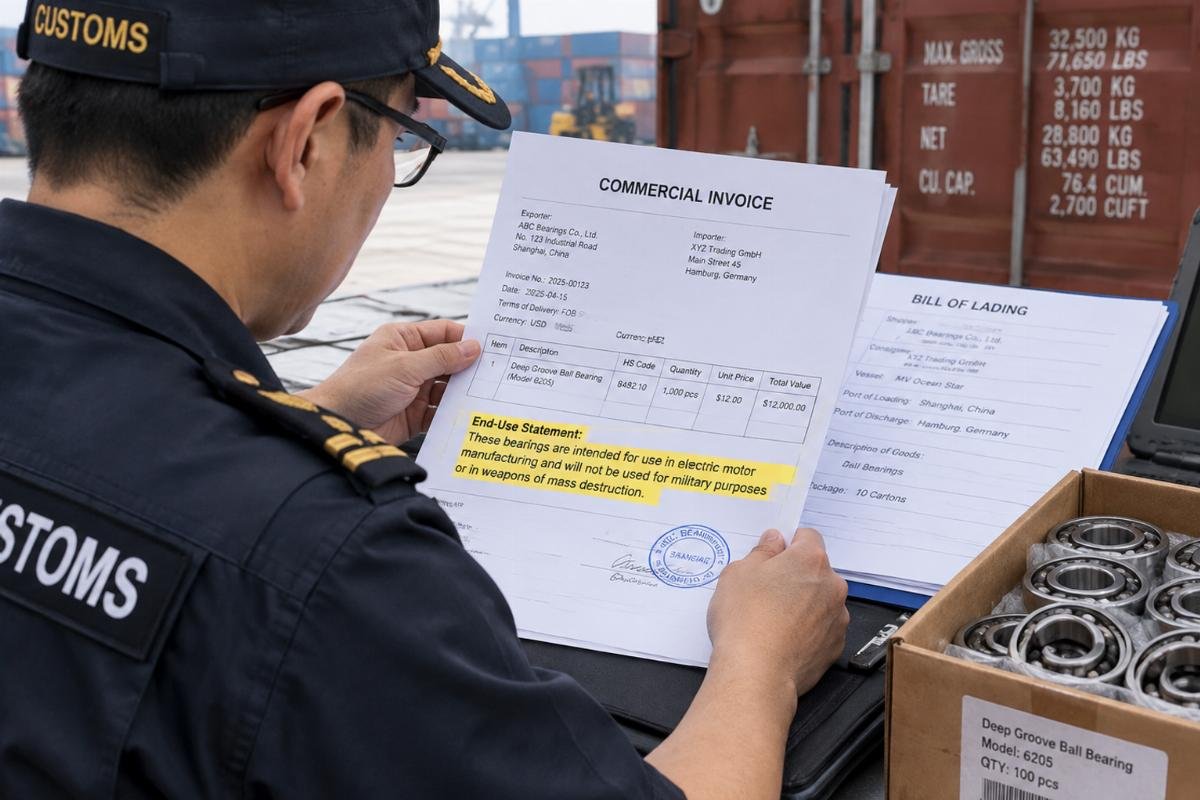
Bearing Export Control: Why End-Use Statements Matter
Vague paperwork is the single biggest cause of customs delays for bearing shipments.
Precise end-use statements that specify exact machinery models and operating environments prevent dual-use flags, ensuring smooth customs clearance and avoiding costly demurrage fees.
I used to sit on the buyer’s side in Jakarta, casually ticking ‘industrial use’ on import forms. It felt efficient at the time. Now, managing bearing exports from our Indonesia rep office, I see that same buyer laziness causing customs nightmares. I still cringe remembering a shipment of spherical roller bearings stuck at Tanjung Priok for weeks because the end-use statement just said ‘machinery’. Customs flagged it as potential dual-use, racking up massive demurrage fees. Buyers always complain about strict paperwork, but a vague end-use statement doesn’t just delay their machines—it sinks their profit margins. That’s why I’m obsessed with nailing down exact application details before a single pallet leaves the warehouse. [NEED_CITE: common reasons for customs holds on industrial components]
This pattern repeats across regions. When documentation lacks specificity, automated risk algorithms trigger manual reviews. Understanding how to craft a compliant bearing export control end-use statement is not just about compliance; it is about protecting your supply chain velocity.
Why Do Customs Flag Bearing Shipments?
Generic descriptions like “for industrial use” trigger dual-use control algorithms.
Bearings are fundamental components in everything from agricultural tractors to missile guidance systems. This dual-use nature makes them a high-priority target for export control enforcement agencies worldwide. When a commercial invoice or packing list uses broad terms, customs authorities cannot immediately verify that the goods are destined for civilian applications. [NEED_CITE: dual-use item classification criteria for mechanical components]
The core issue lies in the ambiguity. A standard deep-groove ball bearing looks identical whether it is going into a food processing mixer or a military radar array. Without explicit context, the burden of proof shifts entirely to the importer during a physical inspection. This process is slow, intrusive, and expensive.
Consider a recent case involving a European distributor. They shipped a container of mixed-brand bearings to a partner in North Africa. The documentation listed the end-use as “general manufacturing.” Customs officials held the container for three weeks, demanding proof that the bearings were not intended for prohibited military entities. The delay cost the importer significantly more in storage and penalty fees than the value of the bearings themselves.
In contrast, precision bearings destined for wind power projects clear smoothly when the documentation includes exact turbine model specs and detailed tech sheets. The specificity removes doubt. It tells the customs officer exactly where the product is going and what it will do. This clarity is the essence of an effective bearing export control end-use statement.

To avoid these pitfalls, shippers must recognize that customs algorithms are designed to flag uncertainty. Providing granular detail is the only way to bypass these automated filters. [NEED_CITE: impact of documentation quality on customs clearance times]
What Exactly Must an End-Use Statement Include?
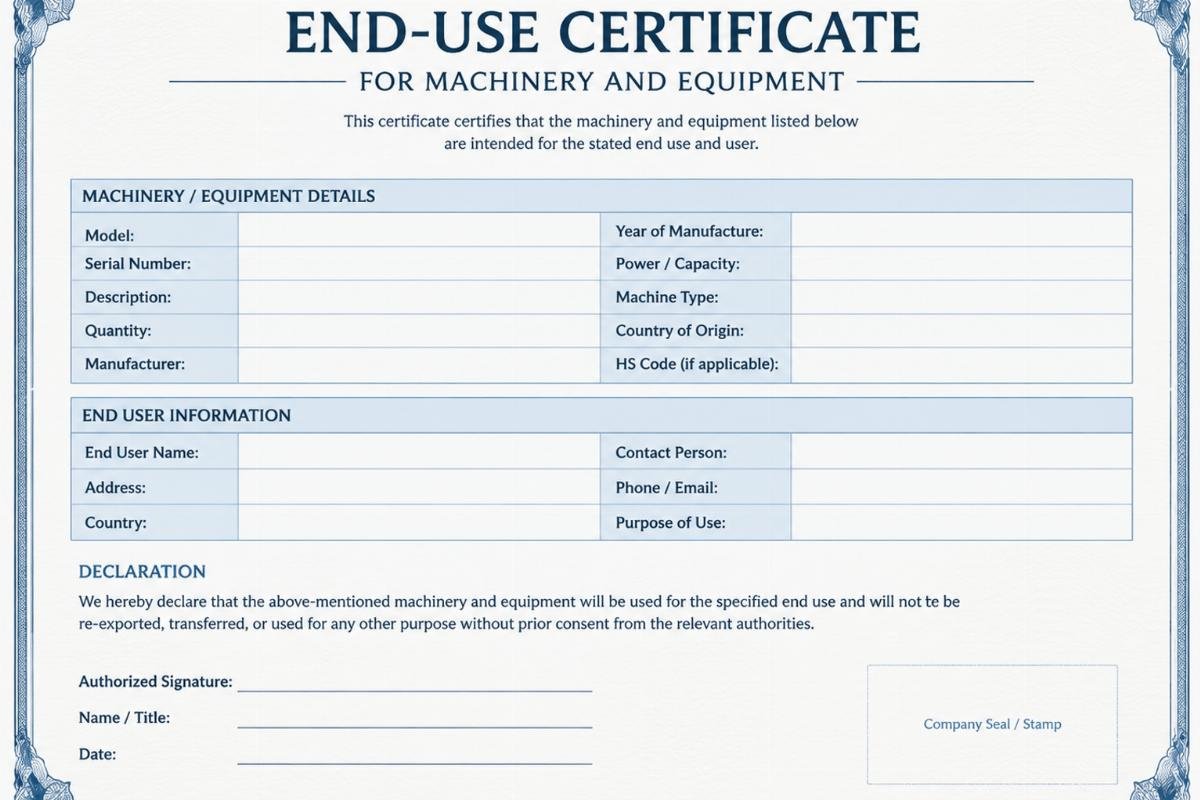
An effective statement must list exact machinery models, serial numbers, and operating environments.
A robust bearing export control end-use statement goes beyond simple product descriptions. It connects the physical item to its final application with unbreakable logical links. Customs officers look for consistency between the technical specifications of the bearing and the stated use case.
Here are the critical elements that must be included:
- Specific Equipment Identification: Instead of “pump,” state “Centrifugal water pump, Model X-200, Serial No. 12345.”
- Operating Environment: Describe the conditions, such as “high-temperature steel mill rolling line” or “offshore wind turbine gearbox.”
- End-User Details: Provide the full legal name and address of the facility where the bearing will be installed, not just the trading company.
- Technical Justification: Explain why this specific bearing type is required. For example, “Spherical roller bearings selected for misalignment compensation in heavy-duty crusher applications.”
| Documentation Element | Vague Example (High Risk) | Precise Example (Low Risk) |
|---|---|---|
| Product Description | Industrial bearings | SKF Spherical Roller Bearing 22220 ECK/W33 |
| End-Use Application | For machinery | For main shaft support in Cement Mill Model CM-500 |
| End-User Facility | Factory in Dubai | Al Fujairah Cement Plant, Plot 45, Dubai Industrial City |
| Technical Context | Standard replacement | High-load, low-speed application requiring C3 clearance |
This level of detail demonstrates due diligence. It shows that the exporter understands the product and its destination. [NEED_CITE: best practices for end-use certification in international trade]
When we prepare documents for our clients, we ensure that every line item on the packing list corresponds to a specific machine part number. This traceability is crucial. It transforms a generic commodity into a specialized component with a clear civilian purpose. This approach minimizes the risk of flags and ensures that the bearing export control end-use statement serves its protective function.
Buyers often underestimate the power of technical datasheets. Including these documents with the shipping papers provides immediate verification for customs officers. It reduces the need for physical inspections and speeds up release times.
How to Prepare Documents for Mixed-Brand Orders?
Itemized packing lists with specific applications for each brand and type are essential.
Mixed-brand MRO orders present a unique challenge. A single container might hold NSK, FAG, and TIMKEN bearings destined for different machines within the same plant. If the documentation lumps them together under a general heading, the entire shipment becomes suspect.
The solution is granular itemization. Each brand and type must be linked to its specific application. For example, “TIMKEN tapered roller bearings for wheel hub assembly of Mining Truck Model MT-100” and “NSK angular contact bearings for spindle of CNC Lathe Model CL-200.”
A Middle East steel mill once faced scrutiny on a mixed container. The initial declaration simply listed “assorted bearings for plant maintenance.” Customs held the cargo for days, requesting clarification on each item. We resolved the issue by providing an itemized equipment overhaul list that mapped every bearing part number to a specific machine asset tag. This level of transparency satisfied the officers and released the cargo.

Preparing these documents requires close collaboration between the procurement team and the maintenance engineers. They must provide the exact asset tags and machine models for every replacement part. This data then feeds into the bearing export control end-use statement, creating a clear audit trail.
Key steps for mixed orders include:
- Segregate by Application: Group items in the packing list by the machine they serve, not just by brand.
- Include Asset Tags: Reference the internal asset identification numbers used by the end-user.
- Attach Maintenance Logs: When possible, include excerpts from maintenance schedules that justify the need for these specific parts.
This method turns a complex, high-risk shipment into a series of low-risk, verifiable transactions. It demonstrates that the importer has full visibility over their inventory and its usage. [NEED_CITE: documentation requirements for consolidated MRO shipments]
What Are the Financial Risks of Non-Compliance?
Demurrage and detention fees can quickly exceed the total value of the bearing order.
The financial impact of a customs hold is rarely limited to the delay itself. Port storage fees, known as demurrage, accumulate daily. For a container stuck at a major port like Tanjung Priok or Rotterdam, these costs can reach hundreds of dollars per day. Over several weeks, the total can surpass the value of the bearings inside.
Beyond direct fees, there are opportunity costs. Production lines stop when critical spare parts are missing. A single hour of downtime in a steel mill or cement plant can cost thousands of dollars. The ripple effect extends to missed delivery deadlines for finished goods and damaged relationships with downstream customers.
| Cost Component | Impact Level | Description |
|---|---|---|
| Demurrage Fees | High | Daily port storage charges that compound over time. |
| Detention Charges | Medium | Fees for holding carrier equipment beyond free time. |
| Production Downtime | Critical | Loss of output due to unavailable spare parts. |
| Administrative Burden | Moderate | Staff hours spent resolving customs queries and appeals. |
These risks are entirely avoidable with proper documentation. A precise bearing export control end-use statement acts as an insurance policy against these hidden costs. It ensures that the cargo moves through customs without unnecessary friction.

Importers must view documentation not as a bureaucratic hurdle but as a critical component of their cost management strategy. Investing time in accurate paperwork yields significant returns by preventing these excessive charges. [NEED_CITE: average demurrage costs at major global ports]
Conclusion
Precision in documentation is the most effective tool for avoiding customs delays.
Vague end-use statements invite scrutiny, while detailed declarations facilitate smooth clearance. By specifying exact machinery models, operating environments, and end-user details, importers can bypass dual-use flags and protect their profit margins. The cost of non-compliance far outweighs the effort required to prepare accurate paperwork. A well-crafted bearing export control end-use statement is essential for efficient global trade.
Need a quote for the bearings in this article?
Send your part numbers and get price, stock and lead time within 4 hours.

Written by
authorEditor covering global sourcing, supplier verification, and industrial product knowledge. Content is compiled from manufacturer specifications, industry standards, and hands-on experience with international B2B buyers. Every article is fact-checked before publishing to help procurement professionals make informed decisions.
View all posts