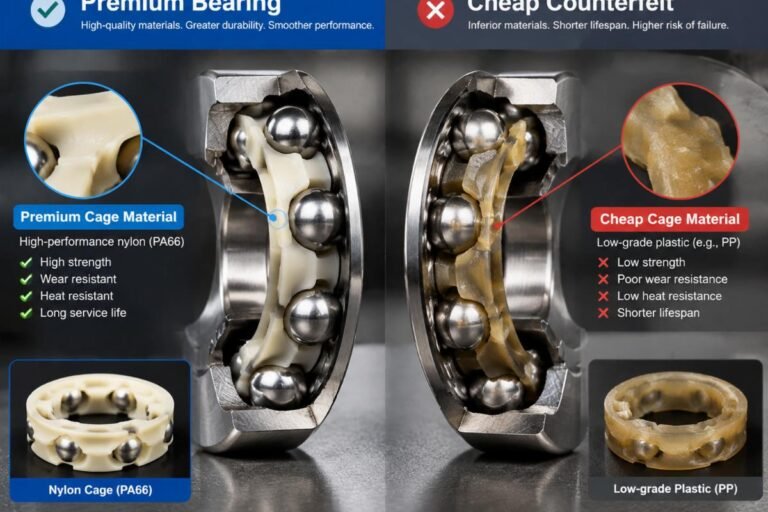
Ceramic Bearings: Full Ceramic vs Hybrid, Worth It?

Ceramic Bearings: Full Ceramic vs Hybrid, Worth It?
Hybrid ceramic bearings are not a budget version of full ceramic; they are a thermal-limit compromise that fails catastrophically if misapplied.
The core difference lies in thermal expansion. Full ceramic bearings use ceramic rings and balls, surviving extreme heat where steel expands. Hybrid ceramic bearings use steel rings with ceramic balls, offering shock absorption but jamming when steel rings expand beyond their design limits at high temperatures. Choosing based on upfront cost rather than operating temperature leads to equipment failure.
I still remember the smell of burnt insulation from a large industrial fan in a client’s plant. The maintenance manager had insisted on using hybrid units to save money, arguing that ceramic balls were enough for high-speed performance. He ignored the fact that the ambient temperature inside the housing regularly exceeded two hundred degrees Celsius. Within months, the steel inner and outer rings expanded significantly due to heat, while the silicon nitride balls remained dimensionally stable. The clearance vanished. The balls jammed. The entire fan assembly seized, causing unplanned downtime that cost far more than the price difference between the two bearing types. That incident reshaped how I approach technical selection. It is not about which component looks superior on paper; it is about matching material properties to the specific thermal and mechanical stresses of the application. [NEED_CITE: thermal expansion coefficients of bearing steel vs silicon nitride]
Understanding this distinction requires looking beyond marketing claims. Many buyers assume that because both types contain ceramic, they share similar performance profiles. This assumption is dangerous in extreme industrial environments. The structural integrity of a bearing depends on the interaction between its rolling elements and its raceways. When those components are made of different materials with vastly different thermal behaviors, the system becomes sensitive to temperature fluctuations.
What is the Core Structural Difference?
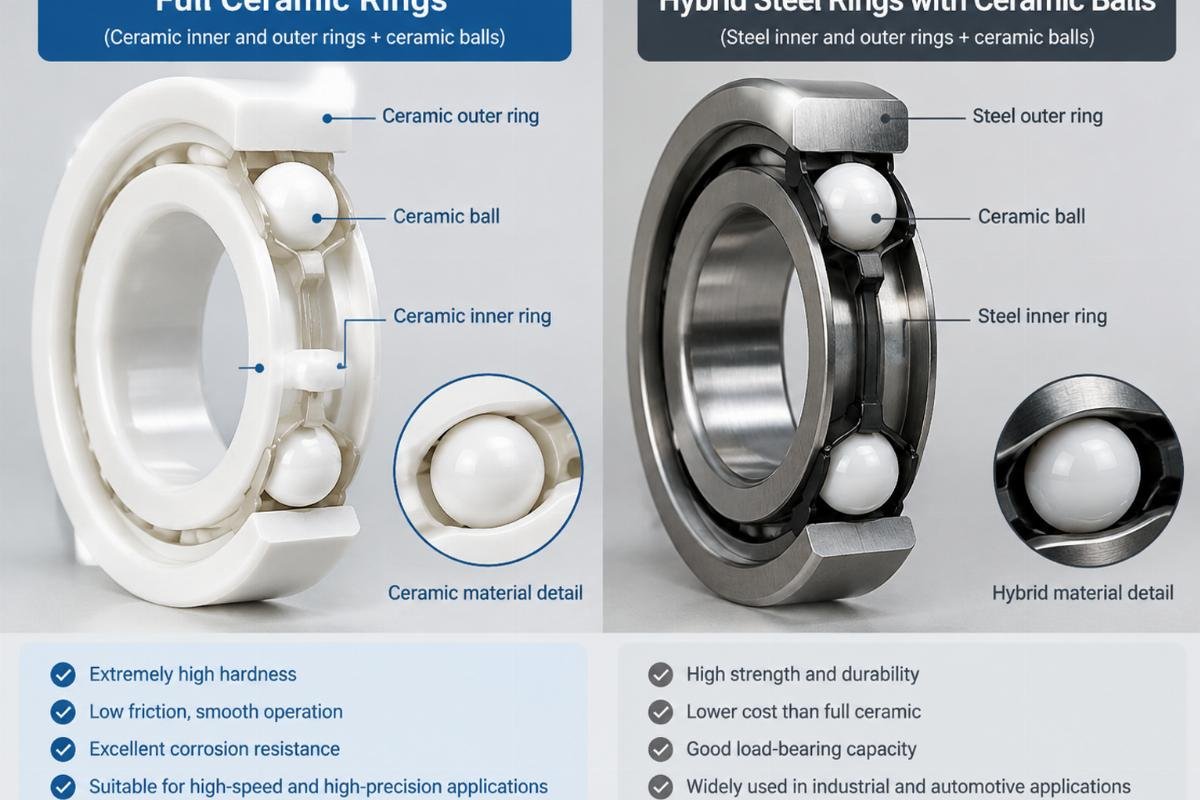
Full ceramic bearings consist entirely of ceramic materials for both the rings and the balls, whereas hybrid ceramic bearings combine steel rings with ceramic balls.
This structural divergence dictates every aspect of performance. In a hybrid configuration, the steel rings provide toughness and familiar mounting characteristics, while the ceramic balls reduce weight and friction. However, the interface between steel and ceramic is a point of vulnerability. Steel has a relatively high coefficient of thermal expansion. Ceramic, particularly silicon nitride or zirconia, has a much lower coefficient. [NEED_CITE: material science data on thermal expansion rates]
In contrast, full ceramic bearings are homogeneous. The rings and balls expand and contract at nearly the same rate. This uniformity eliminates the risk of internal clearance changes due to temperature swings. For applications involving corrosive chemicals or extreme cleanliness, full ceramic offers zero rust potential and non-magnetic properties. Hybrid bearings retain the magnetic and corrosion-prone nature of their steel rings, limiting their use in sensitive environments like food processing or MRI machines.
| Feature | Full Ceramic Bearing | Hybrid Ceramic Bearing |
|---|---|---|
| Ring Material | Ceramic (Si3N4 or ZrO2) | Bearing Steel |
| Ball Material | Ceramic (Si3N4 or ZrO2) | Ceramic (Si3N4 or ZrO2) |
| Thermal Expansion Match | Uniform (Low Risk) | Mismatched (High Risk at Heat) |
| Corrosion Resistance | Complete (Non-metallic) | Limited (Steel Rings Rust) |
| Magnetic Properties | Non-Magnetic | Magnetic (Due to Steel Rings) |
| Shock Load Tolerance | Low (Brittle) | Moderate (Steel Absorbs Impact) |

The choice here is not merely aesthetic. It defines the operational envelope. If your environment involves exposure to acids, alkalis, or seawater, the steel rings in a hybrid bearing will eventually corrode, leading to spalling and premature failure. Full ceramic bearings eliminate this vector entirely. However, if your primary concern is impact resistance in a heavy-load setting, the brittleness of full ceramic rings becomes a liability.
How Does Temperature Dictate Your Choice?
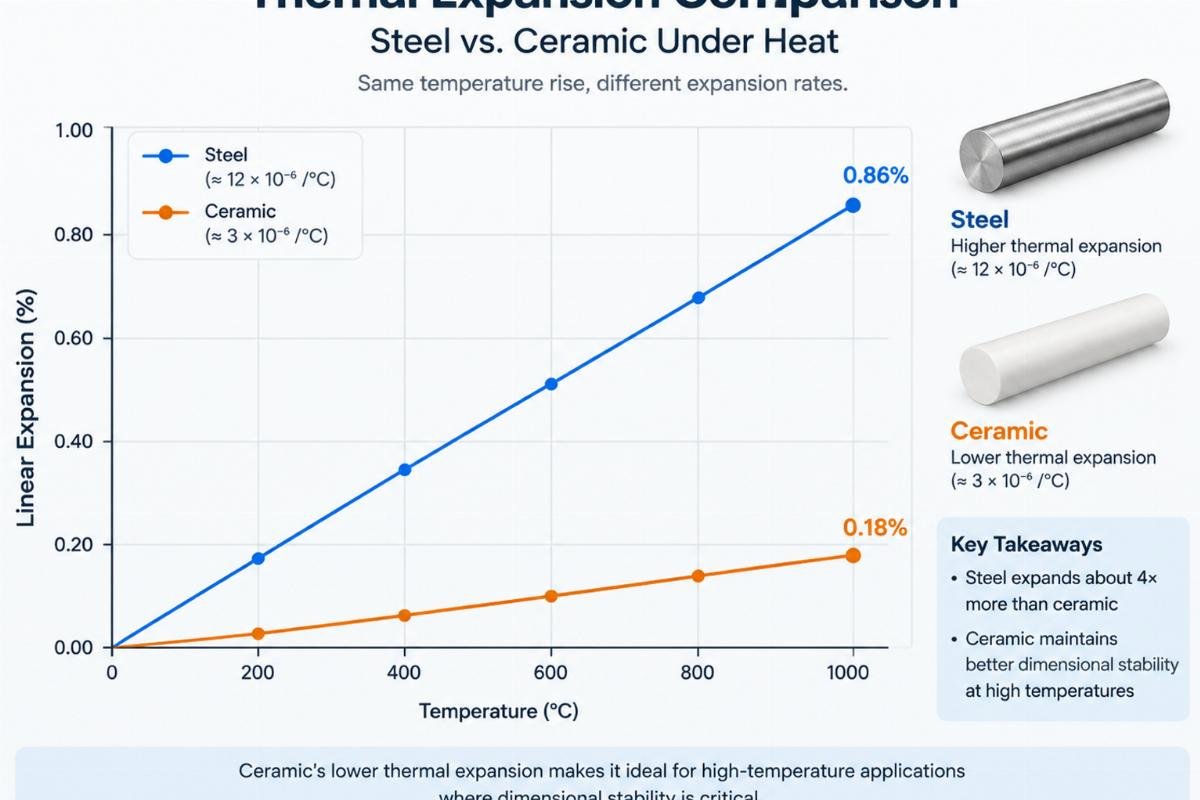
Steel ring expansion in hybrid bearings causes internal clearance to vanish above critical temperatures, leading to seizure, while full ceramic bearings maintain stability in extreme heat.
Temperature is the silent killer of hybrid bearings. As mentioned in the opening case, steel expands when heated. In a standard bearing, this expansion is accounted for in the initial clearance design. But in a hybrid bearing, the ceramic balls do not expand at the same rate as the steel rings. As the temperature rises, the steel rings grow larger in diameter, effectively closing the gap between the balls and the raceways. [NEED_CITE: ISO standards for bearing operating temperature limits]
Once the temperature exceeds a certain threshold, typically around two hundred degrees Celsius for standard steel grades, the clearance can disappear completely. The balls become trapped. Friction spikes. Heat generation accelerates. The bearing locks up. This is not a gradual wear process; it is a sudden mechanical failure.
Full ceramic bearings do not suffer from this mismatch. Their low thermal expansion coefficient means they retain their designed clearance even at temperatures where steel would soften or deform excessively. For applications like kiln fans, exhaust systems, or high-temperature pumps, full ceramic is the only viable option. Using a hybrid bearing in these conditions is a gamble with poor odds.
I have seen distributors recommend hybrid bearings for high-temperature fans because they are cheaper and readily available. The logic seems sound until the equipment fails. The cost of replacing a seized fan, including labor and lost production, dwarfs the savings on the bearing itself. Technical selection must prioritize thermal stability over initial purchase price. [NEED_CITE: industry guidelines for high-temperature bearing selection]
When evaluating your application, consider the maximum continuous operating temperature, not just the average. Spikes in temperature can cause temporary expansion that leads to permanent damage if the clearance is insufficient. Full ceramic bearings provide a safety margin that hybrid designs cannot match in hot environments.
Which Handles Shock Loads Better?
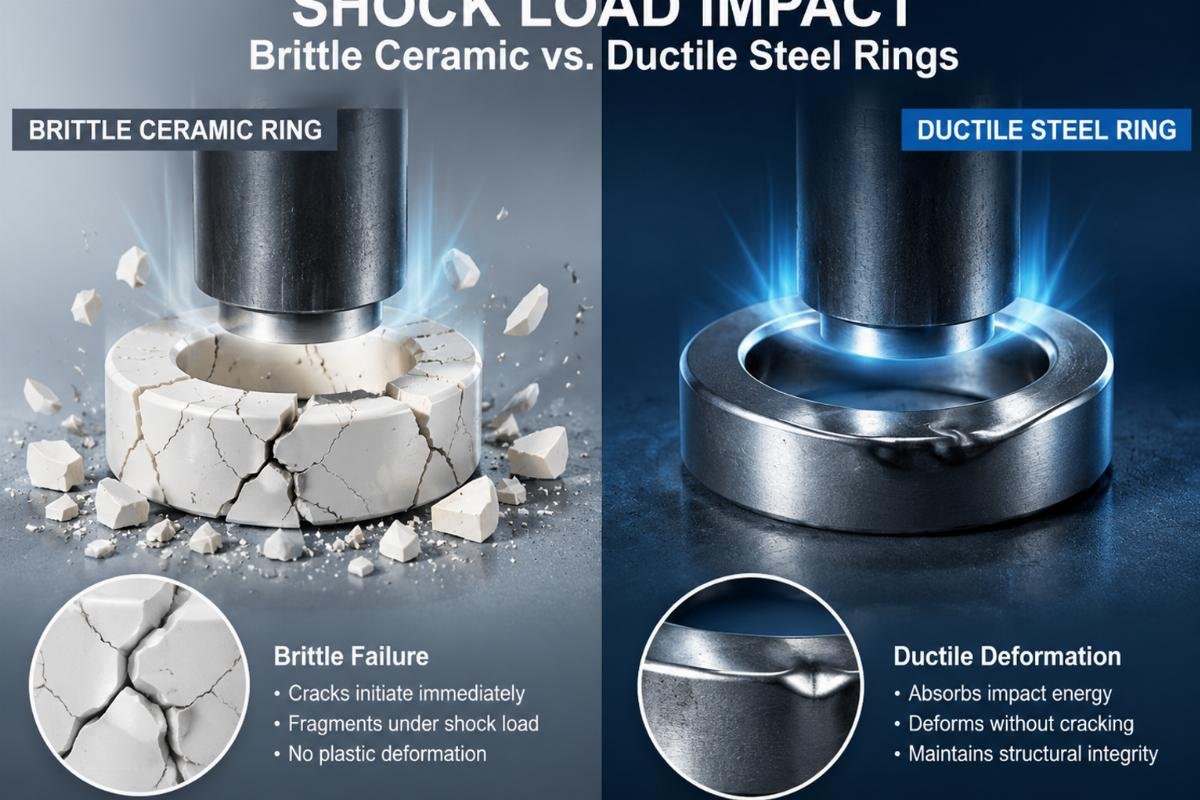
Hybrid steel rings absorb impact energy effectively, while full ceramic rings are prone to micro-cracking under heavy shock loads.
Ceramic is hard, but it is also brittle. This is a fundamental material property. While silicon nitride is tougher than many other ceramics, it lacks the ductility of steel. When a bearing experiences a sudden shock load, such as a hammer blow during installation or an unexpected impact during operation, the energy needs to go somewhere. In a steel bearing, the metal deforms slightly, absorbing the energy. In a full ceramic bearing, the rigid structure cannot deform. Instead, the energy creates stress concentrations that can lead to micro-cracks. [NEED_CITE: fracture toughness data for silicon nitride vs bearing steel]
These micro-cracks may not be visible initially. However, under continued cyclic loading, they can propagate, leading to catastrophic ring fracture. This makes full ceramic bearings unsuitable for applications with high impact risks, such as mining crushers or heavy-duty construction equipment.
Hybrid bearings offer a better solution for shock-prone environments. The steel rings act as a buffer, absorbing the impact energy and protecting the ceramic balls. The ceramic balls still provide benefits like reduced weight and higher speed capability, but the steel rings ensure the bearing can withstand the mechanical abuses common in heavy industry.
A European wind farm operator once switched to full ceramic bearings in their gearbox to reduce weight. They encountered unexpected vibration issues due to grid fluctuations, which created shock loads. Several bearings failed due to ring cracking. Switching back to hybrid bearings resolved the issue, as the steel rings could handle the transient loads without fracturing. This case highlights that “superior” material is context-dependent. [NEED_CITE: case studies on bearing failure modes in wind turbines]
For high-speed spindles or precision instruments where loads are predictable and smooth, full ceramic excels. For rough, unpredictable industrial settings, hybrid bearings provide the necessary robustness. Ignoring this distinction can lead to frequent replacements and unsafe operating conditions.
Is the Price Premium of Full Ceramic Worth It?
Evaluate total cost of ownership against downtime risks; full ceramic prevents costly failures in extreme conditions where hybrid bearings would seize or corrode.
The upfront cost of full ceramic bearings is significantly higher than hybrid or all-steel alternatives. This price premium often deters buyers who focus solely on procurement budgets. However, in extreme environments, the total cost of ownership tells a different story. A failed bearing in a critical process line can halt production for days. The cost of emergency shipping, overtime labor, and lost output can exceed the price of a full ceramic bearing by orders of magnitude.
Consider a chemical pump handling aggressive solvents. A hybrid bearing might last a few months before the steel rings begin to corrode. Replacing it requires shutting down the pump, draining the chemicals, and performing maintenance. A full ceramic bearing, immune to corrosion, can last for years without intervention. The maintenance cycles extend dramatically, reducing labor costs and improving plant availability. [NEED_CITE: maintenance cost analysis for corrosive environment bearings]
Similarly, in high-temperature applications, the risk of seizure with hybrid bearings introduces uncertainty. Full ceramic bearings provide reliability. This reliability translates into predictable maintenance schedules and reduced inventory of spare parts. For MRO buyers and OEMs, this predictability is valuable. It allows for better planning and resource allocation.
Our experience sourcing genuine SKF, FAG, and NSK bearings has shown that clients who invest in the correct material for their specific工况 see a return on investment through reduced downtime. We provide technical selection support to ensure that buyers do not overspend on full ceramic where hybrid would suffice, nor underspend on hybrid where full ceramic is required. This balanced approach prevents both wasted capital and catastrophic failure.
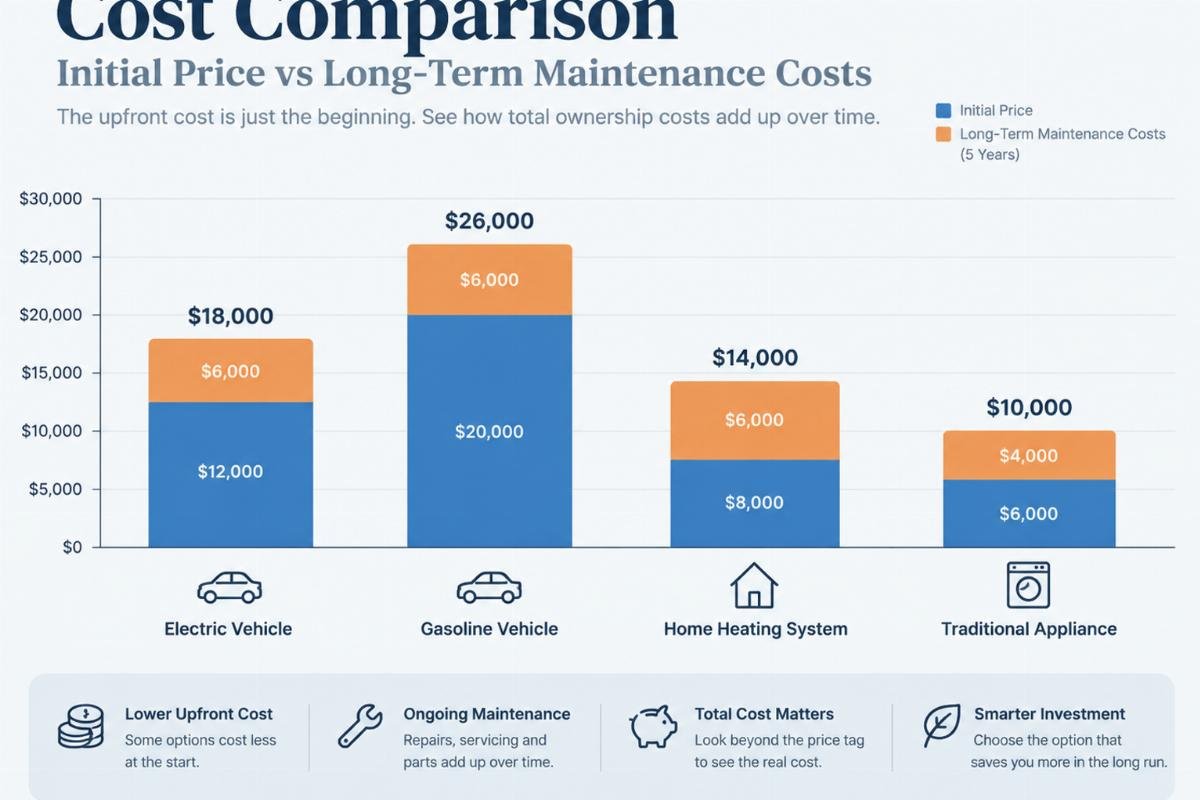
The decision should not be driven by fear of cost, but by fear of failure. In extreme conditions, the right bearing pays for itself by keeping the machine running.
Conclusion
Selecting the right ceramic bearing requires matching material properties to thermal and mechanical demands, not just minimizing upfront cost.
Full ceramic bearings excel in high-temperature and corrosive environments due to their uniform thermal expansion and chemical inertness. Hybrid ceramic bearings offer a balance of speed and shock resistance, making them suitable for moderate temperatures and impact-prone applications. Misapplying either type leads to premature failure and increased operational costs. Always prioritize technical compatibility over price to ensure reliable performance.
Need a quote for the bearings in this article?
Send your part numbers and get price, stock and lead time within 4 hours.

Written by
authorEditor covering global sourcing, supplier verification, and industrial product knowledge. Content is compiled from manufacturer specifications, industry standards, and hands-on experience with international B2B buyers. Every article is fact-checked before publishing to help procurement professionals make informed decisions.
View all posts