C3 Bearing Clearance: When to Order C3 vs Normal for Wholesale


C3 Bearing Clearance: When to Order C3 vs Normal for Wholesale
Bigger clearance is not always better. In many standard industrial applications, specifying a C3 bearing when a normal clearance unit is required will introduce unnecessary vibration, noise, and premature fatigue failure.
For wholesale buyers, the rule is strict: specify normal (C0) radial internal clearance for standard ambient temperatures and loose or standard shaft fits. Specify C3 bearing clearance only when operating temperatures exceed standard ranges or when tight interference fits on the shaft or housing are mandatory to prevent thermal expansion from eliminating operational clearance.
I learned this distinction the hard way in Dongguan, handling documentation for deep groove ball bearings. I once processed an order for water pump motors destined for Southeast Asia. The protocol specified C3 due to the high ambient heat and tight motor fits, but I defaulted to the standard normal clearance stock we had on hand. The result was catastrophic. Within months, the bearings seized completely due to thermal expansion closing the internal gap. The claim landed on my desk, and the lesson was expensive: wholesale selection is never just about copying a part number. It is about understanding the physics of fit and temperature. [NEED_CITE: thermal expansion effects on bearing internal clearance]
Understanding when to deviate from the standard is critical for distributors and OEMs who want to avoid costly field failures. This guide breaks down the technical realities behind C3 bearing clearance selection.
What is the Exact Difference Between C3 and Normal (C0) Clearance?
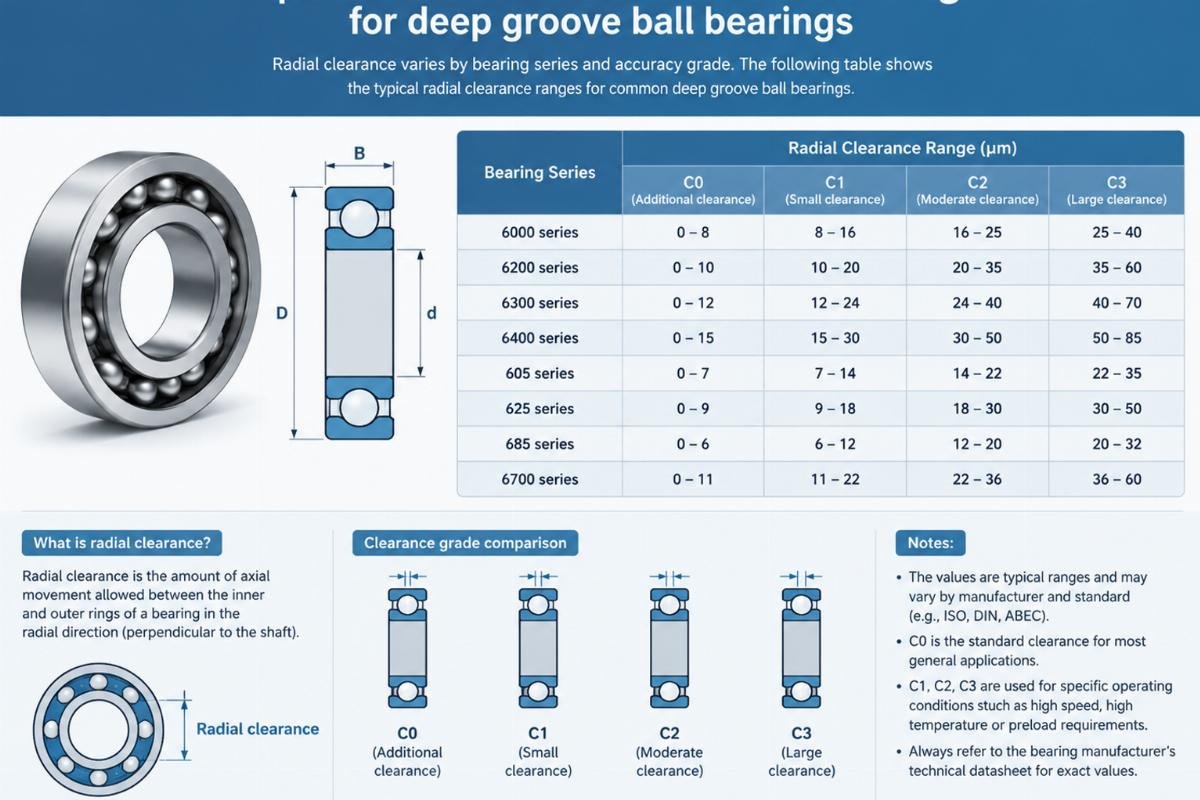
C3 bearing clearance provides a larger radial internal clearance than normal (C0) clearance to accommodate operational shifts caused by heat and mechanical fit.
Many buyers assume clearance refers to the space between the balls and the raceways when the bearing is sitting on a shelf. While true, the critical metric is the residual clearance after the bearing is mounted and running. Normal clearance, often referred to as C0 or CN, is designed for standard operating conditions where the inner and outer rings are at similar temperatures and the fits are standard.
When you select C3 bearing clearance, you are choosing a unit with a predefined higher range of internal play. This extra space is not for handling heavier loads directly; it is a buffer. As a bearing operates, two things happen: the shaft may expand due to heat, and the interference fit between the inner ring and the shaft can stretch the inner ring, reducing its internal diameter. Both actions reduce the internal clearance. If you start with normal clearance in these conditions, the operational clearance can drop to zero, causing the rolling elements to bind.
| Feature | Normal (C0/CN) Clearance | C3 Bearing Clearance |
|---|---|---|
| Radial Internal Play | Standard range per ISO 5753 | Larger range per ISO 5753 |
| Primary Application | Standard ambient temperature | Elevated operating temperatures |
| Fit Compatibility | Loose or standard shaft fits | Tight interference fits |
| Noise Level | Lower in standard conditions | Potentially higher if misapplied |
| Thermal Compensation | Minimal | Significant |
[NEED_CITE: ISO 5753 radial internal clearance tables]
The table above highlights the structural differences. Note that C3 does not mean “heavy-duty” in terms of load capacity. A common misconception is that a C3 bearing is stronger. It is not. It is simply more spacious internally. Using it in a cold environment with a loose fit allows the balls to rattle, leading to skidding and early surface damage.
When Must You Specify C3 Instead of Normal Clearance?
You must specify C3 bearing clearance when the application involves high operating temperatures or tight interference fits on the shaft or housing.
This is the most frequent area of error in B2B procurement. Buyers often upgrade to C3 thinking it is a safer, more robust option for all industrial machinery. This is incorrect. C3 is a specific solution for specific problems.
First, consider temperature. In electric motors, especially those in tropical climates or enclosed spaces, the inner ring heats up faster than the outer ring. This differential expansion causes the inner ring to grow, effectively tightening its grip on the rolling elements. If the initial clearance is normal, this thermal growth can eliminate the play entirely. A case in point involved mining conveyor rollers in a high-heat environment. The initial specification used normal clearance, leading to high early replacement rates. Switching to C3 bearing clearance allowed the bearings to accommodate the thermal expansion without seizing, extending the service life meaningfully.
Second, consider the fit. When a bearing is pressed onto a shaft with a tight interference fit, the inner ring expands slightly. This expansion reduces the internal clearance. If the fit is very tight, the reduction can be significant. Combining a tight fit with high operating temperatures creates a double penalty on clearance. In such scenarios, C3 is not optional; it is mandatory.
However, do not use C3 for standard gearboxes operating at ambient temperatures with standard fits. A European gearbox manufacturer once reported increased noise and reduced precision after switching to C3 for no technical reason. The excessive play allowed for micro-movements that degraded the gear mesh accuracy. For standard applications, normal clearance provides the optimal balance of rigidity and smooth operation.
[NEED_CITE: ABMA guidelines on interference fit effects on clearance]

What Happens If You Choose the Wrong Clearance?
Choosing the wrong clearance leads to either catastrophic seizure or premature fatigue failure, depending on whether you undershoot or overshoot the requirement.
The consequences of error are asymmetric. Choosing normal clearance when C3 is required is dangerous. As seen in the Southeast Asia water pump case, the lack of thermal compensation leads to zero clearance. The rolling elements have no room to move. Friction spikes, heat generates rapidly, and the bearing seizes. This is not a gradual wear issue; it is a sudden failure that can damage the shaft and housing, leading to extensive repair costs.
Conversely, choosing C3 bearing clearance when normal is required is less immediately destructive but still costly. In cold environments or with loose fits, the excessive clearance allows the rolling elements to move unpredictably. This causes vibration and noise. More importantly, it leads to skidding. Instead of rolling smoothly, the balls or rollers slide against the raceways. This sliding action wears away the lubricant film and damages the metal surface, leading to premature fatigue.
| Error Type | Condition | Consequence | Severity |
|---|---|---|---|
| Underspecifying | High Heat/Tight Fit + Normal Clearance | Thermal Seizure | Critical |
| Overspecifying | Standard Temp/Loose Fit + C3 Clearance | Vibration, Noise, Skidding | Moderate to High |
A distributor in Latin America reported that a batch of C3 bearings installed in standard agricultural fans caused noticeable vibration complaints from end-users. The fans were not hot, and the fits were loose. The C3 clearance was simply too large for the application, resulting in a full order return. This highlights that C3 bearing clearance is not a universal upgrade. It is a specific tool for specific conditions.
[NEED_CITE: root cause distribution per ISO 15243]

How to Verify Clearance During Wholesale Procurement?
Verify clearance by checking suffix codes on packaging, requesting measurement reports, and ensuring proper storage to prevent pre-mounting damage.
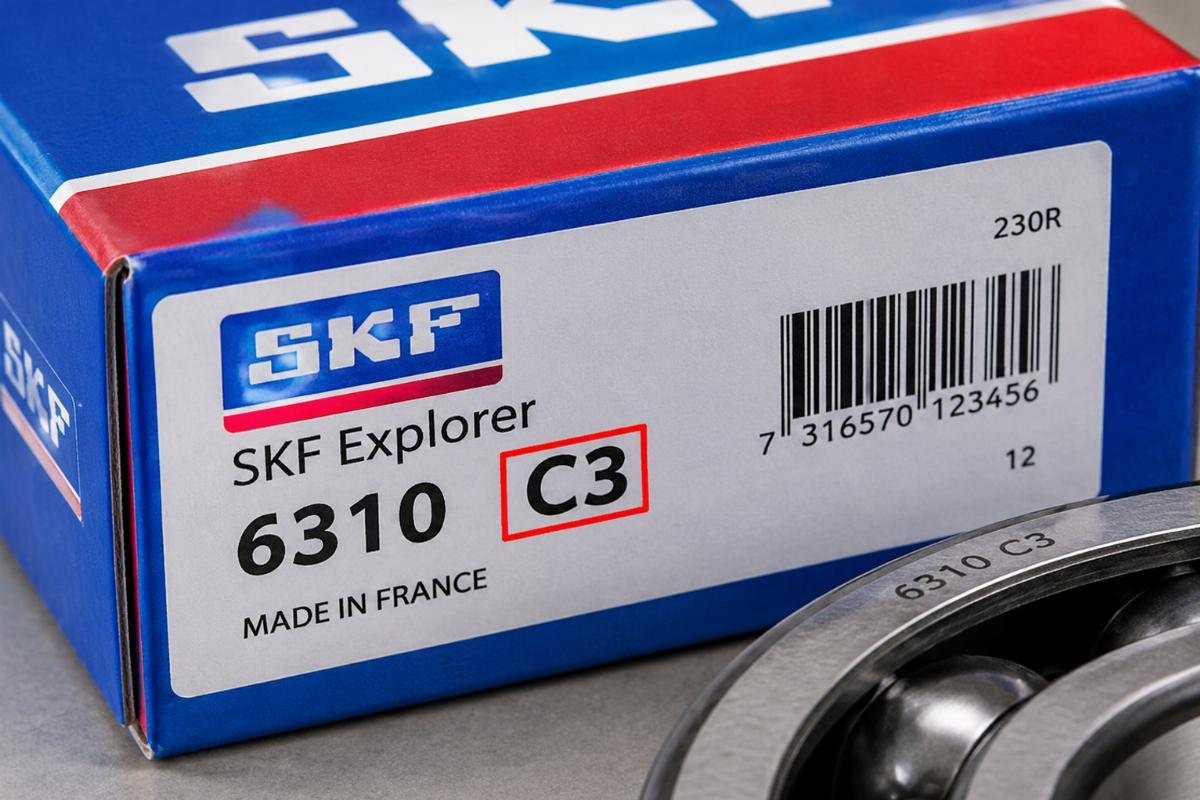
For wholesalers and OEMs, ensuring you receive the correct clearance is vital. Bearings often look identical regardless of their internal clearance. A C0 and a C3 6205 bearing have the same external dimensions. You cannot tell them apart by visual inspection alone.
First, always check the suffix code on the box and the bearing itself. Standard normal clearance usually has no suffix or is marked CN. C3 bearing clearance will explicitly carry the C3 suffix. However, relying solely on the box is risky. Mislabeling can occur. For critical orders, request a measurement report from the supplier. Reputable suppliers can provide verification that the bearings meet the ISO 5753 standards for the specified clearance group.
Second, consider the supply chain. We maintain a massive spot inventory covering thousands of standard and special part numbers, including genuine SKF, FAG, NSK, and other premium brands. When sourcing mixed-batch consolidations, ensure that the technical selection support is available to confirm that the C3 units are not mixed with normal units inadvertently. Our one-stop sourcing approach allows for flexible MOQ and mixed-brand packages, but technical verification remains the buyer’s responsibility.
Finally, storage matters. Bearings stored in humid or fluctuating temperature environments can suffer from corrosion or dimensional shifts. Ensure that your warehouse conditions are stable. If you are distributing to regions with extreme climates, consider the transit conditions. A bearing shipped in a hot container may experience temporary expansion, but this should not affect the permanent clearance if the bearing is of good quality.
[NEED_CITE: bearing storage and handling best practices]
Conclusion
Clearance selection is a technical decision, not a marketing upgrade.
Normal clearance suits standard ambient conditions and loose fits. C3 bearing clearance is mandatory for high-temperature environments and tight interference fits. Choosing incorrectly leads to either seizure or vibration. Verify specifications through suffix codes and technical documentation to ensure operational reliability.
Need a quote for the bearings in this article?
Send your part numbers and get price, stock and lead time within 4 hours.

Written by
authorEditor covering global sourcing, supplier verification, and industrial product knowledge. Content is compiled from manufacturer specifications, industry standards, and hands-on experience with international B2B buyers. Every article is fact-checked before publishing to help procurement professionals make informed decisions.
View all posts

