Noisy Bearing Grinding Humming Squealing Causes Fix Wholesale Supplier


Noisy Bearing Grinding Humming Squealing Causes Fix Wholesale Supplier
Most bearing noise is not a quality defect. It is an installation or maintenance error.
Bearing grinding, humming, and squealing noises primarily stem from improper mounting techniques, incorrect lubrication volumes, or shaft misalignment rather than inherent manufacturing flaws. Systematic diagnosis of these acoustic symptoms allows operators to resolve root causes without unnecessary component replacement.
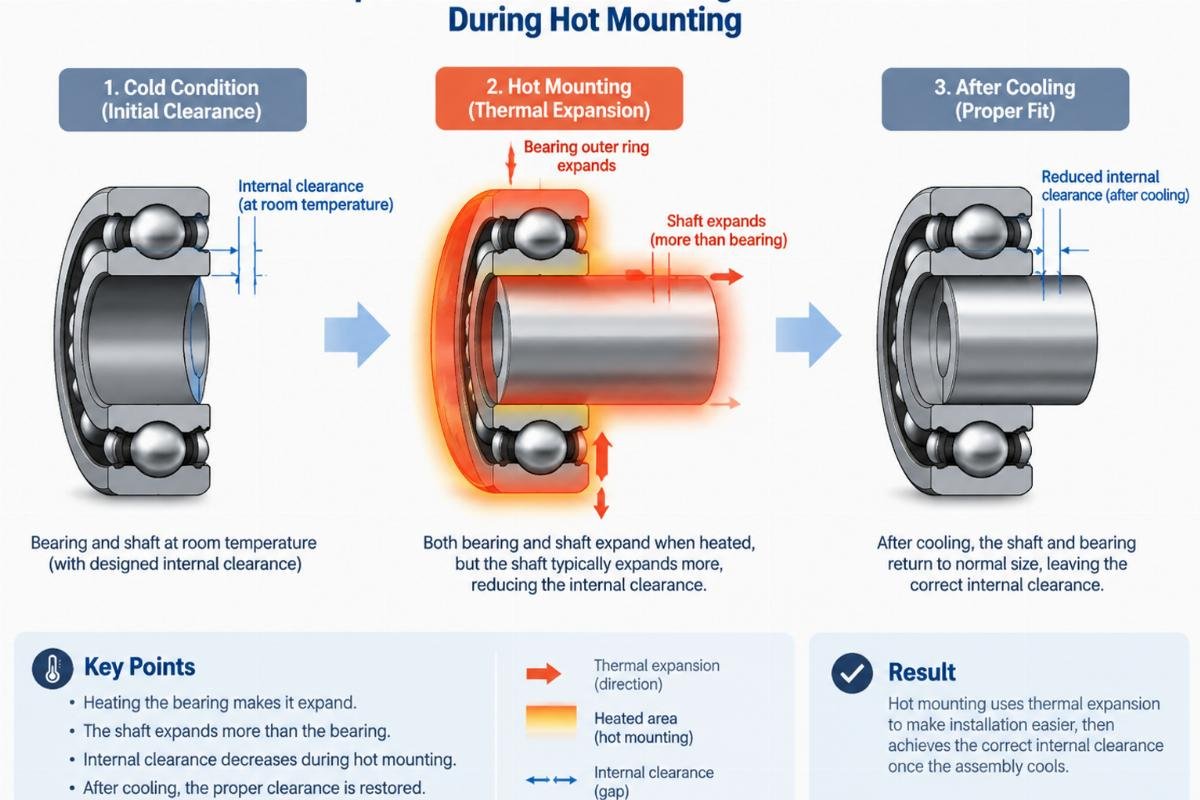
I still remember the dust hanging in the air at a copper mine in Chile. The site manager was furious, pointing at a newly installed main shaft bearing that emitted a high-pitched squeal. He accused us of supplying counterfeit goods. I climbed onto the crusher frame, placed my hand on the housing, and felt the heat radiating through the steel. The bearing was not defective. The installation team had exceeded the recommended hot-mounting temperature, causing the internal clearance to vanish completely. The resulting dry friction created the scream. This incident reshaped how I approach every technical inquiry. When clients report abnormal sounds, I do not immediately suspect the product. I investigate the process. [NEED_CITE: common installation errors leading to premature bearing failure]
Understanding the specific acoustic signature of a failing bearing is the first step toward effective troubleshooting. Different noises indicate distinct mechanical issues. By correlating sound with operational conditions, maintenance teams can pinpoint the exact failure mode. This approach minimizes downtime and prevents costly mistakes. As a noisy bearing causes fix wholesale supplier, we see these patterns repeatedly across global industries.
Why Does My Bearing Squeal After Installation?
High-pitch squealing often indicates zero internal clearance due to overheating during mounting.
Many operators assume squealing means the rolling elements are defective. In reality, this sound frequently results from excessive interference fit caused by improper heating methods. When a bearing is heated beyond the manufacturer’s specified limit, the inner ring expands too much. Upon cooling, it contracts tightly against the shaft, eliminating the designed internal clearance. Without this clearance, the balls or rollers cannot move freely, leading to metal-to-metal contact and high-frequency noise. [NEED_CITE: relationship between mounting temperature and internal clearance loss]
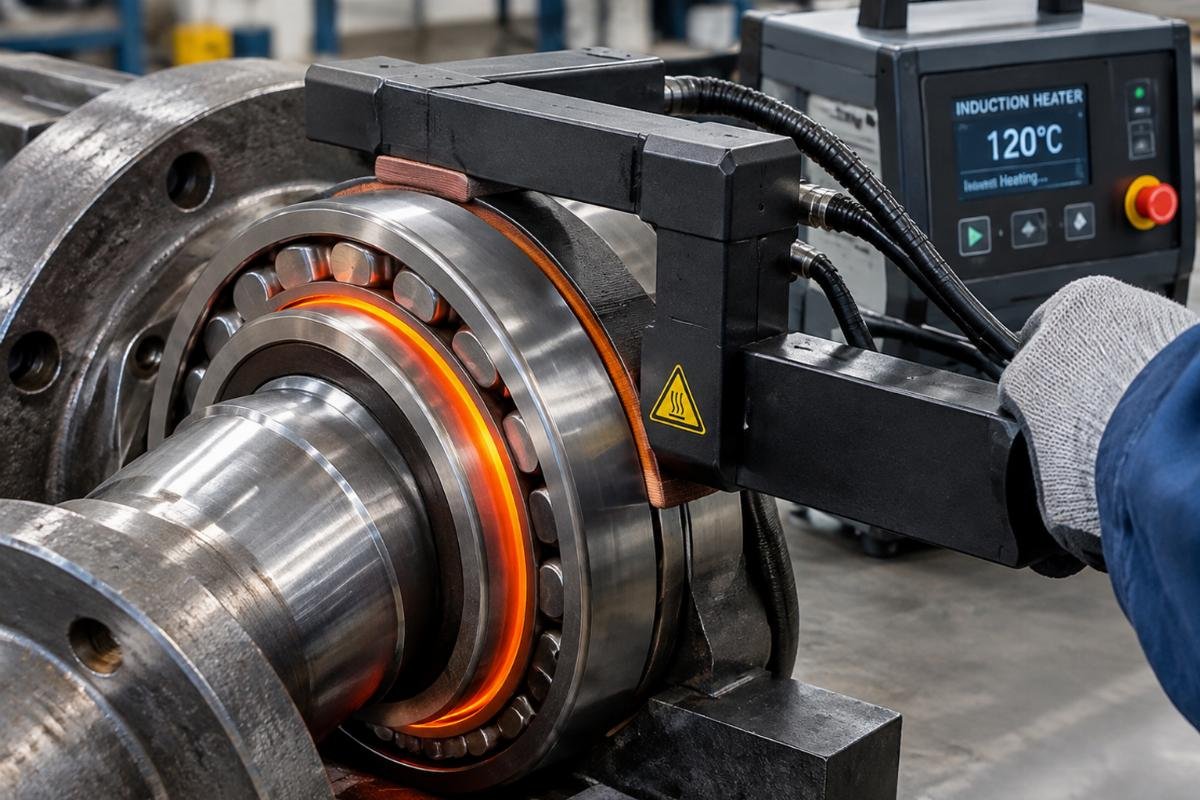
Consider a case involving a large spherical roller bearing used in a mining conveyor drive. The maintenance team used an open flame to heat the bearing for installation. They did not monitor the temperature. Once installed, the bearing began squealing immediately upon startup. Vibration analysis confirmed severe cage distress and roller skidding. The root cause was not material fatigue but thermal distortion during assembly. Replacing the bearing with a new unit solved the problem only temporarily because the same installation method was used again. Proper induction heating with temperature control would have prevented the issue entirely.
| Factor | Incorrect Practice | Correct Practice |
|---|---|---|
| Heating Method | Open flame or uncontrolled oven | Induction heater with temperature monitoring |
| Temperature Limit | Exceeds 120°C (varies by seal type) | Stays within manufacturer specified range |
| Clearance Check | Not performed post-installation | Verified using feeler gauges or dial indicators |
| Result | Zero clearance, squealing, early failure | Maintained clearance, quiet operation |
This table highlights the critical differences in mounting procedures. Note that temperature limits depend on the bearing type and seal material. Always consult the specific technical documentation for the brand in use. [NEED_CITE: standard mounting temperature limits for sealed bearings]
What Causes Continuous Humming Under Load?
Humming usually signals lubrication issues, specifically under-filling or wrong viscosity.
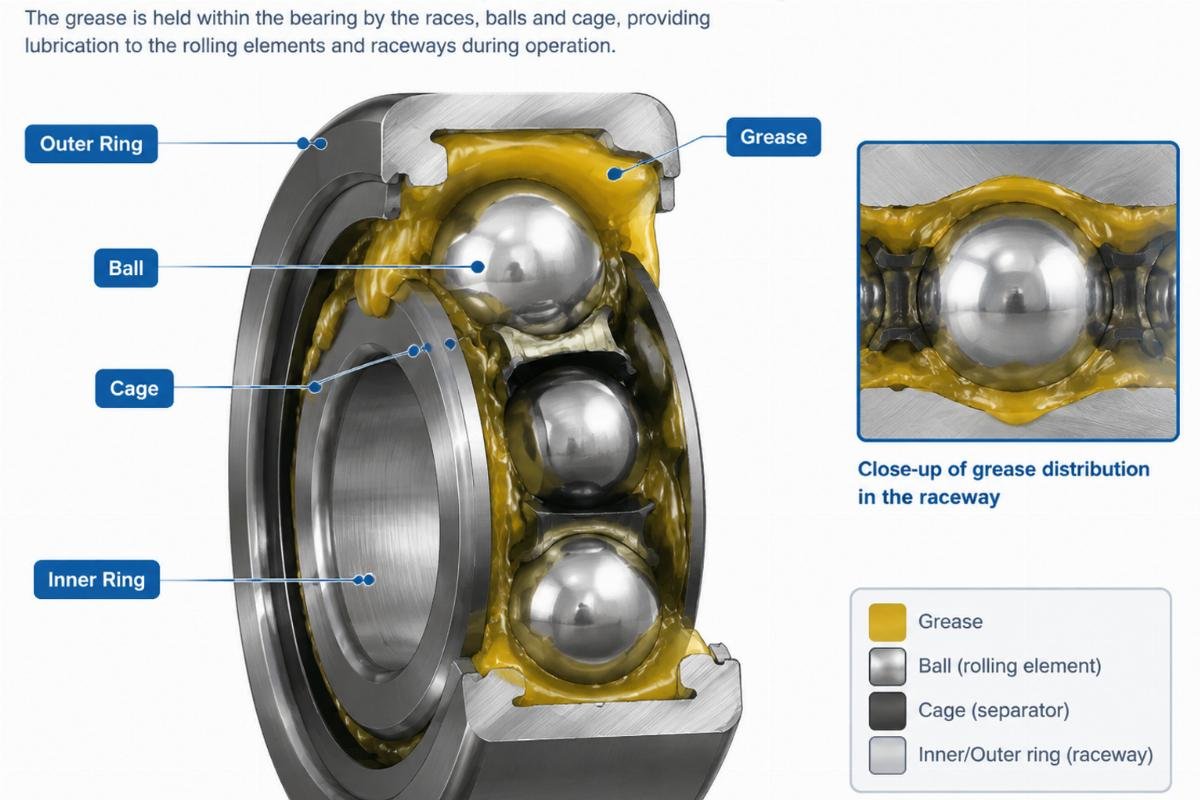
A continuous low-frequency hum is often mistaken for normal operational noise or early wear. However, this sound typically points to inadequate lubrication film thickness. When the grease volume is too low, or the viscosity is incorrect for the operating speed and load, the rolling elements do not separate fully. This leads to boundary lubrication conditions, generating a steady humming sound. [NEED_CITE: impact of lubricant viscosity on bearing noise levels]
In a recent project with a cement plant in Southeast Asia, several idler rollers began humming after a routine regreasing schedule. The maintenance crew had switched to a cheaper grease with higher base oil viscosity, assuming it would provide better protection under heavy loads. Instead, the thicker grease could not penetrate the narrow clearances of the high-speed rollers effectively. The result was churning and insufficient film formation, creating the hum. Switching back to the recommended ISO VG grade grease resolved the noise within hours.
Grease fill volume is another critical factor. Overfilling can cause churning and heat generation, while underfilling leads to metal contact. The optimal fill ratio depends on the bearing speed and type. For high-speed applications, a lower fill percentage is often required to allow space for grease movement and heat dissipation. [NEED_CITE: optimal grease fill ratios for different bearing speeds]
| Condition | Symptom | Likely Cause |
|---|---|---|
| Low Fill Volume | Humming, increased temperature | Insufficient lubricant film |
| Wrong Viscosity | Humming, poor penetration | Mismatched grease grade |
| Overfilling | Churning noise, high temp | Excessive resistance to motion |
| Contamination | Gritty humming, vibration | Particle ingress in grease |
Identifying the correct lubricant requires understanding the operating environment. Factors such as temperature, load, and speed dictate the necessary viscosity and additive package. Using the wrong product can be as damaging as no lubrication at all.
How to Diagnose Grinding Noise Post-Overhaul?
Grinding noises after overhaul typically stem from shaft misalignment causing edge loading.
A harsh grinding sound following maintenance work is a serious warning sign. It often indicates that the bearing is experiencing edge loading due to shaft misalignment. When the shaft and housing are not perfectly aligned, the load concentrates on one side of the raceway. This uneven stress causes the rolling elements to grind against the raceway edges, producing a distinctive abrasive noise. [NEED_CITE: effects of angular misalignment on bearing load distribution]
An industrial pump manufacturer in Europe faced this issue after replacing bearings in a high-pressure feed pump. The new bearings began grinding shortly after startup. Inspection revealed that the pump casing had shifted slightly during reassembly, causing angular misalignment exceeding acceptable tolerances. The bearing outer ring was distorted, leading to uneven load distribution. Correcting the alignment and reinstalling the bearings eliminated the noise.
Misalignment can occur due to various reasons, including thermal expansion, foundation settling, or improper assembly. Regular alignment checks using laser tools can prevent this issue. Even small deviations can significantly reduce bearing life and generate noise. [NEED_CITE: tolerance limits for shaft alignment in rotating machinery]
| Misalignment Type | Effect on Bearing | Acoustic Signature |
|---|---|---|
| Angular Misalignment | Edge loading, raceway damage | Harsh grinding, intermittent |
| Parallel Misalignment | Uneven load distribution | Grinding, increased vibration |
| Soft Foot | Dynamic misalignment under load | Variable grinding, vibration spikes |
Addressing misalignment requires precise measurement and correction. Laser alignment systems provide accurate data to ensure shafts are within specified tolerances. Ignoring these signs can lead to catastrophic failure.

When Is Noise a Sign of Genuine Defect?
True manufacturing defects are rare and usually manifest as consistent irregularities across batches.
While most noise issues stem from application errors, genuine defects do occur. These are typically related to material inclusions, surface finish irregularities, or cage manufacturing errors. Such defects often produce consistent noise patterns across multiple units from the same batch. [NEED_CITE: statistical frequency of manufacturing defects in premium bearing brands]
In my experience, distinguishing between application-induced noise and manufacturing defects requires careful analysis. If a single bearing fails noisily while others from the same batch perform well, the issue is likely installation-related. However, if multiple bearings from the same lot exhibit similar noise characteristics, a manufacturing defect may be present. In such cases, traceability documentation becomes crucial for warranty claims and root cause analysis.
Working with a reliable noisy bearing causes fix wholesale supplier ensures access to genuine products with full traceability. This allows for accurate investigation when defects are suspected. Counterfeit or substandard bearings often lack the precision and material quality of genuine products, leading to higher failure rates and unpredictable noise patterns.
Conclusion
Noise is a symptom, not always a sentence.
Bearing grinding, humming, and squealing are rarely random events. They are logical outcomes of specific mechanical conditions. By understanding the root causes—installation errors, lubrication mismatches, and misalignment—operators can diagnose and resolve these issues effectively. This knowledge prevents unnecessary replacements and extends equipment life. Trust in precise diagnostics over immediate assumptions.
Need a quote for the bearings in this article?
Send your part numbers and get price, stock and lead time within 4 hours.

Written by
authorEditor covering global sourcing, supplier verification, and industrial product knowledge. Content is compiled from manufacturer specifications, industry standards, and hands-on experience with international B2B buyers. Every article is fact-checked before publishing to help procurement professionals make informed decisions.
View all posts

