Counterfeit Bearings: Practical Checks Before You Pay


Counterfeit Bearings: Practical Checks Before You Pay
Paperwork proves nothing until the box is opened.
A clean commercial invoice and a polished certificate of conformity offer zero protection against counterfeit bearings once the container seals are broken at the destination port. To verify genuine bearings before payment, buyers must physically inspect three specific elements: the micro-texture of laser markings on the inner ring, the structural integrity of anti-counterfeit packaging labels under UV light, and the exact character match between physical batch codes and shipping documents. Relying solely on administrative records invites costly rejections. A thorough counterfeit bearings check requires hands-on verification of these tangible markers during pre-shipment inspection or upon arrival at the consolidation warehouse.
The risk is not theoretical. In my early days handling documentation in Ningbo, I processed a shipment for a client in the Middle East. The paperwork was flawless, stamped and signed by every relevant party. Yet, when the goods arrived at Jebel Ali, the client rejected the entire lot. The issue was not the brand name printed on the box, but the QR code on the security label. When scanned, it did not lead to the manufacturer’s official verification portal but to a generic, unsecured webpage. This single failure triggered a chain reaction of customs holds and financial losses that far exceeded the value of the bearings themselves. Since then, I have learned that trust must be built on physical evidence, not just printed letters.
Why Packaging Details Reveal More Than Certificates
Most buyers focus on the bearing itself, but the packaging is the first line of defense and often the easiest point of failure for counterfeiters. High-quality original packaging uses specific cardboard densities and printing techniques that are difficult to replicate without access to the manufacturer’s supply chain. A proper counterfeit bearings check starts with the box. Genuine boxes feature crisp, high-resolution printing with no bleeding ink. The font weight and spacing are consistent across all sides. In contrast, fake packaging often exhibits slight color shifts, blurry logos, or uneven cut edges on the cardboard flaps.
| Feature | Genuine Packaging | Counterfeit Packaging |
|---|---|---|
| Print Quality | Sharp, high-resolution, no bleeding | Blurry, low-resolution, ink smudges |
| Cardboard Texture | Dense, rigid, uniform thickness | Thin, flexible, inconsistent layers |
| Security Label | Integrated, tamper-evident, UV reactive | Sticker-applied, peels easily, no UV response |
| Batch Code Alignment | Matches inner box and outer carton | Mismatched or handwritten corrections |
[NEED_CITE: ISO standards for industrial packaging durability and marking requirements]
I recall a case involving a European distributor who ordered a mixed container of spherical roller bearings. Upon inspection, we noticed that while the outer cartons looked acceptable, the inner individual boxes had a slightly different shade of blue. Under closer examination, the adhesive on the security seals was weak, allowing the labels to be lifted and reapplied without leaving visible damage. This is a common tactic used to swap genuine empty boxes with fake products inside. By catching this discrepancy before payment, we avoided a situation where the end-user would have discovered the fraud only after installation failure. The visual difference in box printing quality is often subtle but definitive when compared side-by-side with a known genuine sample.

Decoding Laser Markings and Engraving Precision
The bearing itself carries the most critical data. Manufacturers use laser etching or dot-peen marking to imprint part numbers, brand logos, and origin codes directly onto the steel. This process requires precise control over energy levels and focus, resulting in marks that are clean, deep, and uniform. Counterfeiters often lack this equipment, resorting to cheaper methods like acid etching or low-power laser marking that leaves a shallow, irregular impression.
When performing a counterfeit bearings check, examine the edge sharpness of the laser engraving. Genuine marks have distinct, sharp edges with no burrs or roughness around the characters. The depth is consistent throughout the string. Fake marks often appear fuzzy, with uneven depth or signs of manual touch-ups. In one instance, a batch of deep groove ball bearings arrived with part numbers that looked correct at a glance. However, under magnification, the edges of the letters showed significant blurring, and the spacing between characters was inconsistent. This indicated a low-quality laser source typical of small-scale workshops rather than an automated production line.
Another key indicator is the location and format of the markings. Each brand has strict guidelines on where the part number, batch code, and logo should appear on the inner and outer rings. Deviations from this standard layout are immediate red flags. For example, if a brand typically places the logo on the outer ring face but the received goods have it on the side, the product is likely fake. These details are not random; they are part of the manufacturer’s quality control protocol. [NEED_CITE: Major bearing manufacturer technical guidelines for marking placement and format]

The Critical Role of Batch Number Consistency
Perhaps the most overlooked aspect of authentication is the batch number. Every genuine bearing set is assigned a unique batch or lot number that traces its production date, factory line, and material heat. This number must appear on the bearing, the individual box, and the master carton. More importantly, it must match the commercial invoice and packing list provided by the supplier. Discrepancies here are not clerical errors; they are signs of mixed or falsified inventory.
A frequent scenario in the industry involves suppliers combining stock from different sources to fulfill an order. If the physical batch codes on the bearings do not align with the documentation, it suggests that the goods may have been sourced from unauthorized channels or are remnants of previous rejected lots. During a recent inspection for a mining client, we found that the batch numbers on the inner rings matched the boxes, but neither matched the invoice. The supplier claimed it was a “system update” error. However, further investigation revealed that the bearings were from an older production run with known material inconsistencies, repackaged with new documentation to hide their history.
To avoid this, always request photos of the actual batch codes on the products before finalizing payment. Compare these images directly with the documents. If the supplier hesitates or provides vague explanations, proceed with caution. A reliable counterfeit bearings check includes verifying that the alphanumeric sequence on the steel is identical to the paper trail. [NEED_CITE: Supply chain traceability best practices for industrial components]

Navigating Port Rejections and Financial Loss
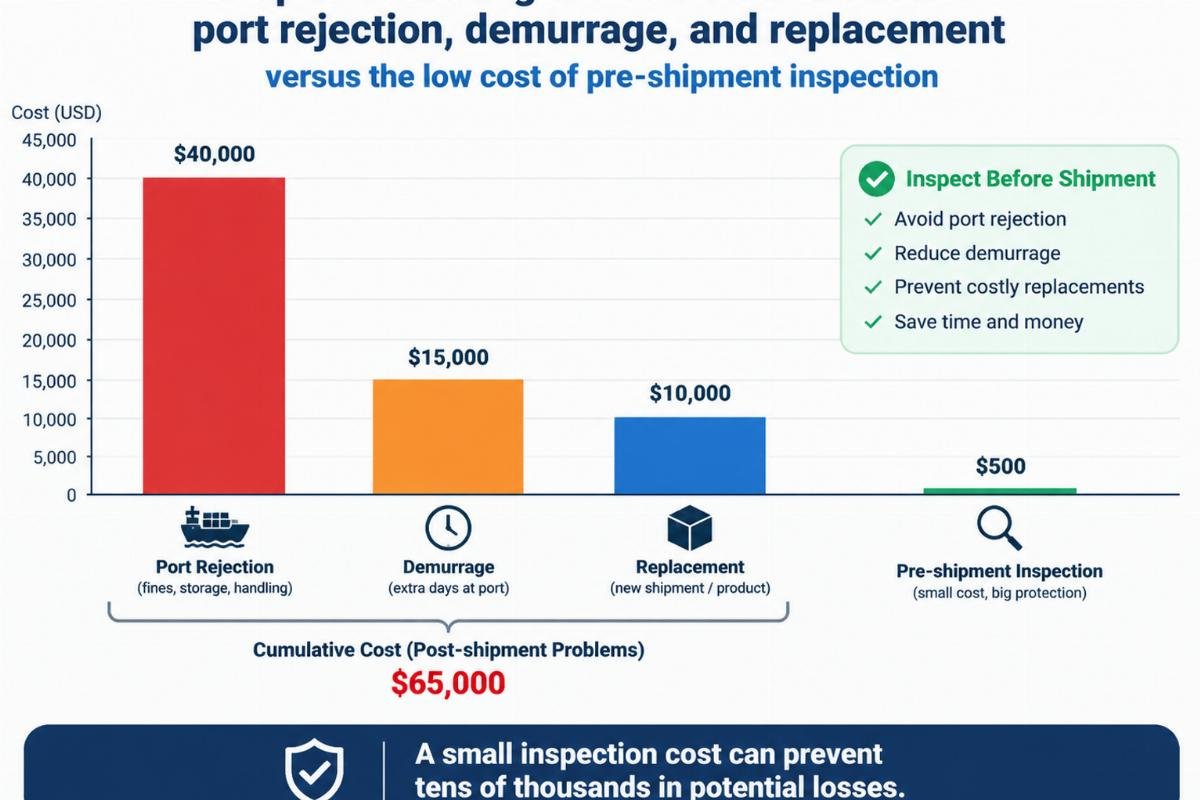
The consequences of failing to identify counterfeit goods extend beyond the cost of the parts. When fake bearings are discovered at the destination port, the buyer faces demurrage charges, customs penalties, and the cost of return shipping or destruction. In severe cases, the entire container can be held for investigation, delaying production lines and damaging relationships with end-users.
Consider the case of a wind farm operator in Southeast Asia. They received a shipment of high-precision bearings for turbine gearboxes. The paperwork was perfect, but the bearings failed within months due to premature fatigue. Investigation showed that the steel quality was substandard, lacking the necessary cleanliness for high-load applications. The cost of replacing the failed units, including crane rental and downtime, was multiples of the initial savings from buying cheaper, unverified stock. This highlights why verifying genuine bearings before payment is not just about quality assurance; it is about risk management.
Anti-counterfeit labels that fail QR scans are a common trigger for such disputes. Modern brands use dynamic QR codes that link to a secure database. If the code is static, leads to a broken link, or directs to a non-official site, the product is suspect. Buyers should test a sample of these codes during inspection. If even one fails, the entire batch should be quarantined for further testing. This proactive step prevents the nightmare scenario of discovering the fraud after the goods have cleared customs and entered the supply chain.
Building a Verification Protocol for Distributors
For regional distributors and MRO buyers, establishing a standard operating procedure for authentication is essential. This protocol should include visual checks of packaging, detailed inspection of laser markings, and rigorous cross-referencing of batch numbers. It is not enough to rely on the reputation of the supplier; every shipment must be treated as potentially compromised until proven otherwise.
Training staff to recognize these signs is equally important. They should know what genuine printing looks like, how proper laser etching feels to the touch, and where to find the batch codes. Keeping a library of genuine samples for comparison can speed up this process. When in doubt, consult with the brand’s local representative or a trusted third-party inspection agency. The goal is to create a culture of skepticism that protects the business from financial loss and reputational damage.
Implementing these steps does not require expensive equipment. A good magnifying glass, a UV light, and a keen eye are often sufficient. The key is consistency. By making these checks a mandatory part of the receiving process, buyers can significantly reduce the risk of accepting counterfeit goods. This approach transforms the counterfeit bearings check from a reactive measure into a proactive shield against fraud.

Conclusion
Verification is cheaper than rejection.
Avoiding counterfeit bearings requires moving beyond paperwork to physical inspection of packaging quality, laser marking precision, and batch number consistency. These tangible checks provide the only reliable proof of authenticity before payment is released. By integrating these steps into your procurement process, you protect your operations from the hidden costs of fake components.
Need a quote for the bearings in this article?
Send your part numbers and get price, stock and lead time within 4 hours.

Written by
authorEditor covering global sourcing, supplier verification, and industrial product knowledge. Content is compiled from manufacturer specifications, industry standards, and hands-on experience with international B2B buyers. Every article is fact-checked before publishing to help procurement professionals make informed decisions.
View all posts

