Consolidated Shipping: SKF, FAG, NSK Bearings Wholesale Supplier


Consolidated Shipping: SKF, FAG, NSK Bearings Wholesale Supplier
LCL is not always cheaper. Poor consolidation planning often triggers hidden port fees that exceed the savings of sharing container space.
Consolidating mixed-brand bearings requires precise volume and weight calculation alongside clear customs classification to avoid port delays and unexpected costs. Accurate CBM math prevents floor damage, while separated HS codes ensure smooth clearance. Heavy items must be loaded at the bottom for transit safety, and pre-shipment planning eliminates warehouse rent overruns.
I still remember the smell of burnt rubber and rust in a detention yard near Ningbo Port. A client had insisted on stuffing SKF deep groove ball bearings and FAG spherical roller bearings into a single twenty-foot container without a proper loading plan. The heavy rollers were stacked on top of lighter units, crushing the wooden pallets and deforming the container floor. At the destination port, customs officers flagged the shipment because the bill of lading listed a single generic description for multiple brands with different technical specifications. The container sat in the stack for weeks. The demurrage and storage charges eventually ate up most of the profit margin from that order. That incident changed how I approach every consolidated bearing shipping request. Now, every cubic meter and kilogram is calculated before the first box is sealed.
This experience is not unique. Many buyers assume that mixing brands is a simple logistical task. In reality, different bearing densities require strict stacking mathematics. Understanding the mechanics of consolidated bearing shipping is essential for regional distributors and MRO buyers who need cost-effective solutions without compromising on delivery timelines.
How to Calculate Volume for Mixed Bearings?
Accurate CBM and weight calculations are the foundation of safe and cost-effective consolidation. Ignoring these metrics leads to structural damage and rejected shipments.
Bearings are dense. A small box of tapered roller bearings can weigh significantly more than a larger box of deep groove ball bearings. When you mix brands like NSK, TIMKEN, and INA in one shipment, the variance in packaging density increases. If you only calculate based on the outer carton dimensions without considering the internal weight distribution, you risk exceeding the payload limit of specific container types or causing internal collapse.
The volume-weight ratio is critical. Air freight charges by volumetric weight, while sea freight often charges by actual weight if it exceeds certain thresholds per cubic meter. For consolidated bearing shipping, you must request the packed dimensions and gross weight for each SKU from your supplier. Do not rely on net weight. The packaging for premium brands often includes anti-corrosion paper, plastic wraps, and sturdy cardboard, which adds to the volume and weight.
| Bearing Type | Packaging Density | Stacking Risk | Customs Complexity |
|---|---|---|---|
| Deep Groove Ball Bearings | High | Low | Standard |
| Spherical Roller Bearings | Very High | High | Moderate |
| Tapered Roller Bearings | High | Moderate | Moderate |
| Needle Bearings | Medium | Low | Standard |
| Thrust Bearings | Very High | High | High |
[NEED_CITE: industry standards for cargo securing and weight distribution in maritime transport]
A European buyer once ordered a mix of miniature instrument bearings and large agricultural machinery bearings. The supplier packed them in a single pallet without separating the heavy items. During ocean transit, the vibration caused the heavy agricultural bearings to shift, crushing the delicate instrument bearings below. The entire batch was rejected upon arrival. This could have been avoided with a simple weight distribution check.
When planning consolidated bearing shipping, always ask for a detailed packing list that includes individual carton dimensions and weights. Use this data to simulate the loading pattern. If the total weight approaches the container’s maximum payload, consider splitting the shipment or using a high-cube container. Precision here prevents the “hidden” costs of damaged goods and insurance claims.

Why Do Mixed Brands Face Customs Delays?
Clear HS code separation is mandatory to avoid port detention. Mixing brands under a single generic description raises red flags with customs authorities.
Customs officers look for consistency between the physical cargo and the documentation. When you ship SKF, FAG, and NTN bearings together, they may fall under slightly different subheadings depending on their type and application. While many bearings share the same primary HS code, specific types like thrust bearings or needle bearings might have distinct classifications in certain jurisdictions.
If your commercial invoice lists “Bearings” as a single line item for a mixed container, customs may detain the shipment for physical inspection. This inspection process can take days or weeks. During this time, you incur storage fees. Worse, if the inspector finds discrepancies between the declared value and the market value of specific premium brands, you may face fines.
For consolidated bearing shipping, the best practice is to list each brand and type separately on the commercial invoice and packing list. Even if they share the same HS code, providing detailed descriptions helps customs officers verify the cargo quickly. Include part numbers, brand names, and quantities for each line item.
[NEED_CITE: World Customs Organization guidelines on harmonized system classification for mechanical parts]
A distributor in Southeast Asia once tried to save time by grouping all bearings under one HS code without brand differentiation. The local customs authority suspected undervaluation of the premium German brands. The shipment was held for verification of authenticity and value. The delay disrupted the buyer’s supply chain to local factories, leading to penalty clauses being triggered in their sales contracts.
To mitigate this risk, work with a freight forwarder who understands the nuances of bearing classifications. Ensure your supplier provides accurate country-of-origin certificates for each brand. SKF bearings made in Sweden, Germany, or China must be declared correctly. Misdeclaring the origin can lead to additional duties or outright rejection. Proper documentation is not just paperwork; it is the key to swift clearance in consolidated bearing shipping.

What is the Best Loading Sequence?
Heavy items at the bottom ensures transit safety and prevents product damage. Improper stacking is a leading cause of claim rejections.
Ocean freight involves constant vibration and movement. If light boxes are placed under heavy ones, the lower boxes will collapse. This is especially true for bearings, where the weight is concentrated in small volumes. A box of large spherical roller bearings can weigh hundreds of kilograms, while a box of small ball bearings might weigh only ten kilograms.
The loading sequence should follow a pyramid structure. Place the heaviest and most robust packages at the bottom of the container or on the lowest tier of the pallet. Lighter and more fragile items go on top. Use dunnage or wooden planks to distribute the weight evenly across the container floor. Never point-load heavy bearings onto the corrugated metal floor of a container, as this can puncture it.
[NEED_CITE: International Maritime Organization code of practice for cargo stowage and securing]
In one case, a buyer in Latin America received a container where the supplier had stacked boxes randomly. The heavy TIMKEN tapered rollers were placed on top of lighter KOYO units. Upon arrival, thirty percent of the lower boxes were crushed. The insurance company denied the claim because the loading did not follow standard industry practices. The buyer had to absorb the loss and reorder urgently.
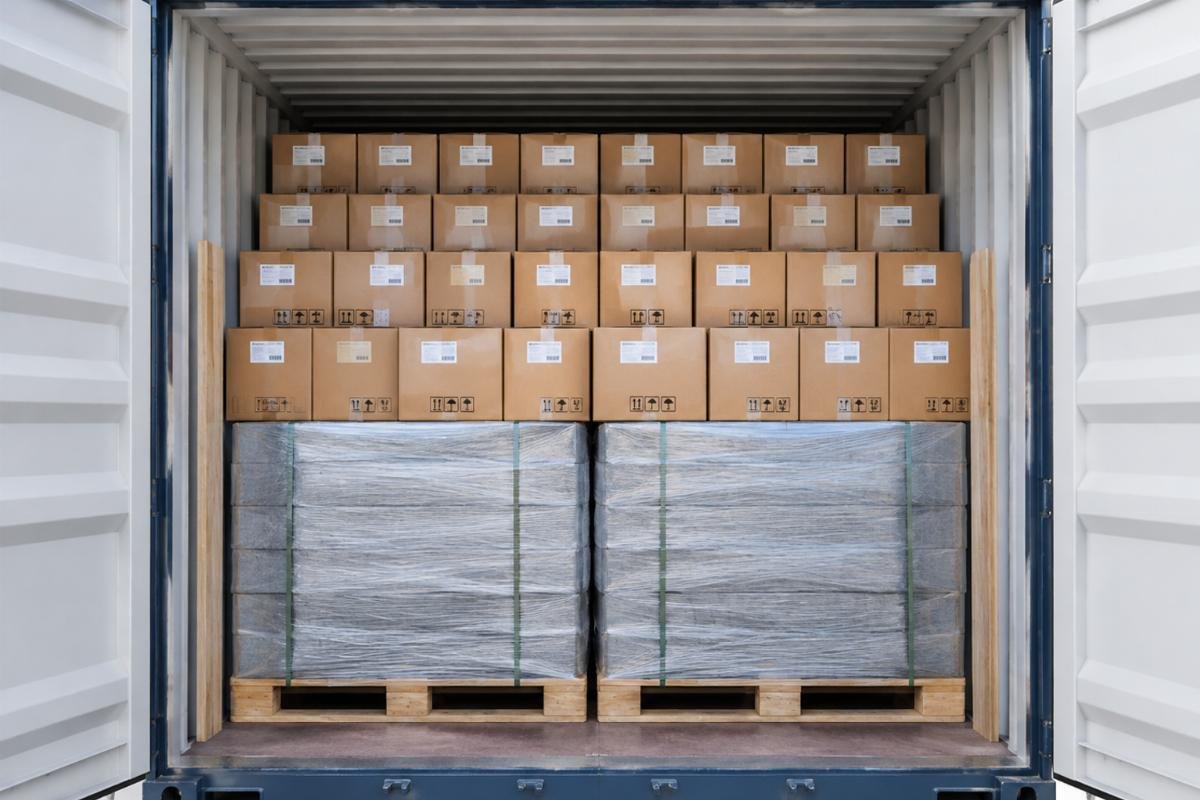
When arranging consolidated bearing shipping, request photos of the loading process. Ensure that void spaces are filled with air bags or foam to prevent shifting during transit. Secure the pallets with strapping bands. If you are using LCL (Less than Container Load), ensure your goods are palletized securely to withstand handling by forklifts at multiple transfer points. Proper loading is a non-negotiable aspect of successful consolidated bearing shipping.
How to Minimize Consolidation Costs?
Pre-shipment planning eliminates hidden warehouse rents. Efficient coordination reduces the time goods sit in storage.
Many buyers believe that LCL is always the cheapest option. However, poor consolidation planning can lead to significant hidden costs. If your supplier takes weeks to gather all the different brands and models you ordered, the goods will sit in their warehouse. Some suppliers charge storage fees after a certain period. Additionally, if the shipment is delayed at the port of origin due to incomplete documentation, you may incur demurrage charges.
To minimize costs, synchronize your orders. Instead of placing small orders for different brands at different times, consolidate your requirements into a single purchase cycle. Work with a supplier who can source multiple brands efficiently. This reduces the number of transactions and allows for better negotiation on freight rates.
[NEED_CITE: logistics best practices for inventory turnover and warehousing cost reduction]
A Middle East steel plant operator used to order emergency spares from three different suppliers. Each shipment arrived separately, incurring three sets of customs clearance fees and handling charges. By switching to a single supplier who could provide SKF, NSK, and domestic brands in one consolidated bearing shipping consignment, they reduced their administrative overhead and freight costs significantly. The key was planning their maintenance schedule in advance and placing a consolidated order quarterly.
Avoid last-minute changes to the order. Once the packing list is finalized and the booking is made, changing the quantity or adding items can delay the entire shipment. Ensure that all technical specifications are confirmed before production or sourcing begins. Clear communication with your supplier about your timeline helps them prioritize your order and avoid unnecessary storage periods. Efficient planning turns consolidated bearing shipping from a logistical challenge into a cost-saving strategy.

Conclusion
Precision in planning prevents profit erosion. Successful mixed-brand sourcing relies on accurate data, not assumptions.
Consolidating bearings from multiple brands offers significant advantages in sourcing flexibility and cost efficiency. However, it demands rigorous attention to detail in volume calculation, customs documentation, and loading procedures. By treating consolidated bearing shipping as a technical process rather than a simple transaction, buyers can avoid common pitfalls like port delays, cargo damage, and hidden fees. The goal is not just to move goods, but to move them safely, legally, and economically.
Need a quote for the bearings in this article?
Send your part numbers and get price, stock and lead time within 4 hours.

Written by
authorEditor covering global sourcing, supplier verification, and industrial product knowledge. Content is compiled from manufacturer specifications, industry standards, and hands-on experience with international B2B buyers. Every article is fact-checked before publishing to help procurement professionals make informed decisions.
View all posts

