Normal Bearing Operating Temperature Guide: Wholesale Supplier


Normal Bearing Operating Temperature Guide: Wholesale Supplier
Most bearing failures are not caused by the ambient heat of the environment, but by the internal heat generated from improper lubrication.
The normal operating temperature for standard industrial bearings typically ranges from 20°C to 80°C above ambient temperature. Temperatures consistently exceeding 90°C to 100°C indicate a critical mismatch in load, speed, or lubrication viscosity that requires immediate intervention to prevent catastrophic seizure.
I still remember the stack of claim forms on my desk in Dongguan. It was a shipment of spherical roller bearings destined for a mining operation. They had failed within months, not because the steel was defective, but because the site’s ambient heat had pushed the standard grease past its drop point. The lubricant had turned into a dry, caked residue, leaving the rolling elements to grind against each other. That loss taught me that Normal bearing operating temperature is not just a number on a datasheet; it is a dynamic balance between the machine’s workload and its cooling capacity. Understanding this balance is the difference between a reliable asset and a costly downtime event. [NEED_CITE: common causes of bearing failure related to lubrication]
To avoid similar pitfalls, distributors and MRO managers must look beyond the brand name and focus on the thermal dynamics of the application. This guide breaks down how to identify overheating, understand its hidden causes, and select the right components for harsh environments.
What Is the Normal Operating Temperature Range for Bearings?
Standard bearings are designed to operate safely within specific thermal limits defined by their material composition and lubricant stability.
For most general-purpose industrial applications using standard chrome steel rings and cages, the acceptable operating range is relatively narrow. The bearing itself can withstand higher temperatures, but the limiting factor is almost always the lubricant. Standard mineral-based greases begin to oxidize and lose viscosity at elevated temperatures, leading to metal-to-metal contact. [NEED_CITE: thermal stability limits of common bearing lubricants]
When evaluating Normal bearing operating temperature, it is essential to distinguish between the ring material limits and the lubricant limits. While hardened steel can retain its structural integrity at much higher levels, the seals and cages may deform, and the grease will break down long before the steel fails.
| Component | Standard Limit Qualifier | High-Temp Limit Qualifier | Notes |
|---|---|---|---|
| Bearing Steel Rings | Stable up to moderate heat | Requires special heat treatment | Standard steel loses hardness at extreme heat [NEED_CITE: effect of temperature on bearing steel hardness] |
| Standard Seals | Vulnerable to melting | Resistant to high heat | NBR seals fail earlier than FKM or PTFE |
| Mineral Grease | Noticeably reduced life | Not recommended | Oxidizes rapidly above standard thresholds |
| Synthetic Grease | Substantially extended life | Robust performance | Maintains viscosity better under thermal stress |
A useful rule of thumb for maintenance teams is the “hand test” combined with infrared measurement. If the housing is too hot to touch comfortably for more than a few seconds, it is likely exceeding safe limits. However, precise monitoring requires understanding that a rise in temperature is often gradual. A sudden spike usually indicates a mechanical fault, while a slow creep suggests lubrication degradation or gradual overload.
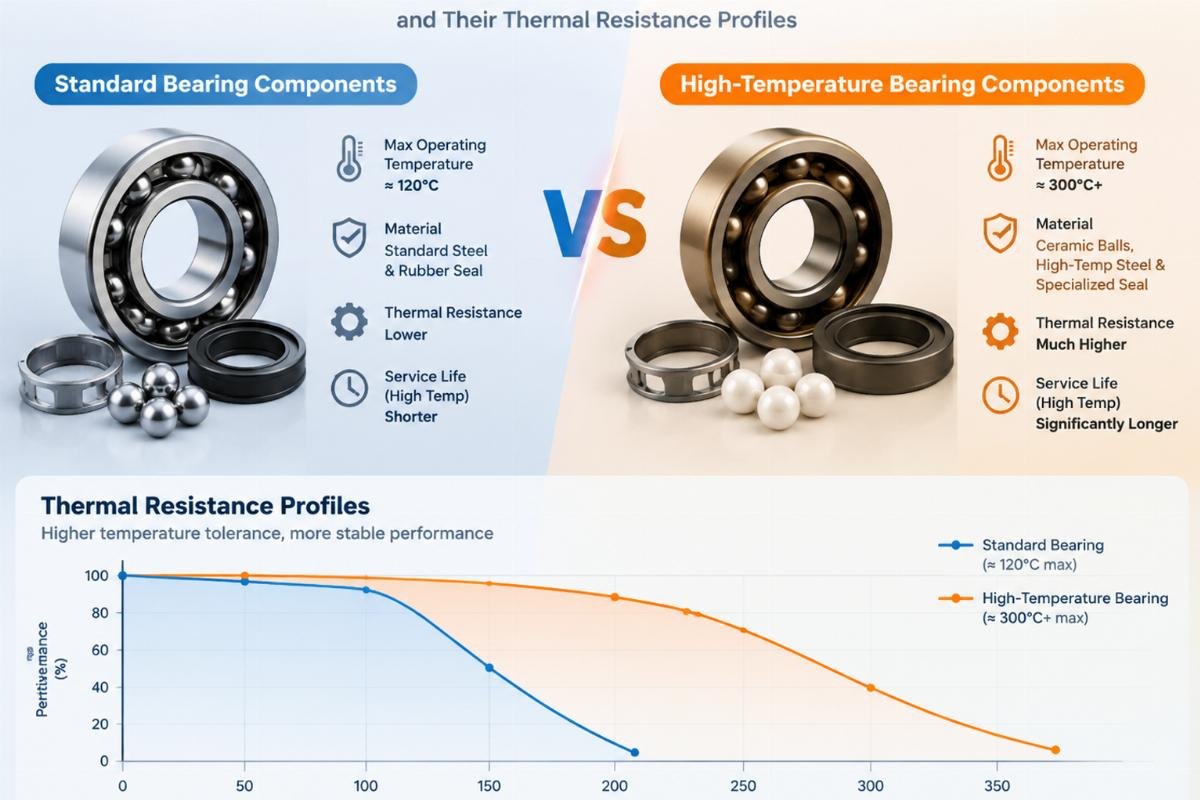
Knowing these baseline limits helps in setting accurate alarm thresholds for condition monitoring systems. It prevents false alarms during normal startup phases while ensuring that genuine overheating events are caught early.
How to Identify if a Bearing Is Running Too Hot?
Identifying overheating requires a combination of real-time temperature monitoring and physical inspection of the lubricant condition.
Relying solely on ambient temperature readings is insufficient. The internal temperature of a bearing can be significantly higher than the external housing surface due to friction and churning. To accurately assess if a unit is running too hot, follow a structured inspection process.
- Baseline Measurement: Record the temperature during normal operation under standard load. This establishes the reference point for Normal bearing operating temperature. Any deviation from this baseline should be investigated.
- Infrared Thermography: Use an infrared gun to scan the housing. Note that surface readings may be lower than internal temperatures. Apply a correction factor based on the housing material and thickness. [NEED_CITE: accuracy of infrared temperature measurement on bearing housings]
- Lubricant Inspection: Extract a small sample of grease. If it appears dark, dry, or has a burnt smell, the bearing has been operating at excessive temperatures. Fresh grease should be uniform in color and consistency.
- Vibration Analysis: Overheating often accompanies increased vibration due to clearance changes or surface damage. Correlate temperature spikes with vibration data to pinpoint the root cause.
A case from a cement plant illustrates this well. Fans were experiencing premature failures. Initial checks showed ambient temperatures were within range. However, thermal imaging revealed hot spots on the non-drive end bearings. Further inspection showed that the grease had carbonized, indicating that the internal friction was generating heat faster than it could dissipate. The issue was not the environment, but the lubrication interval and type.
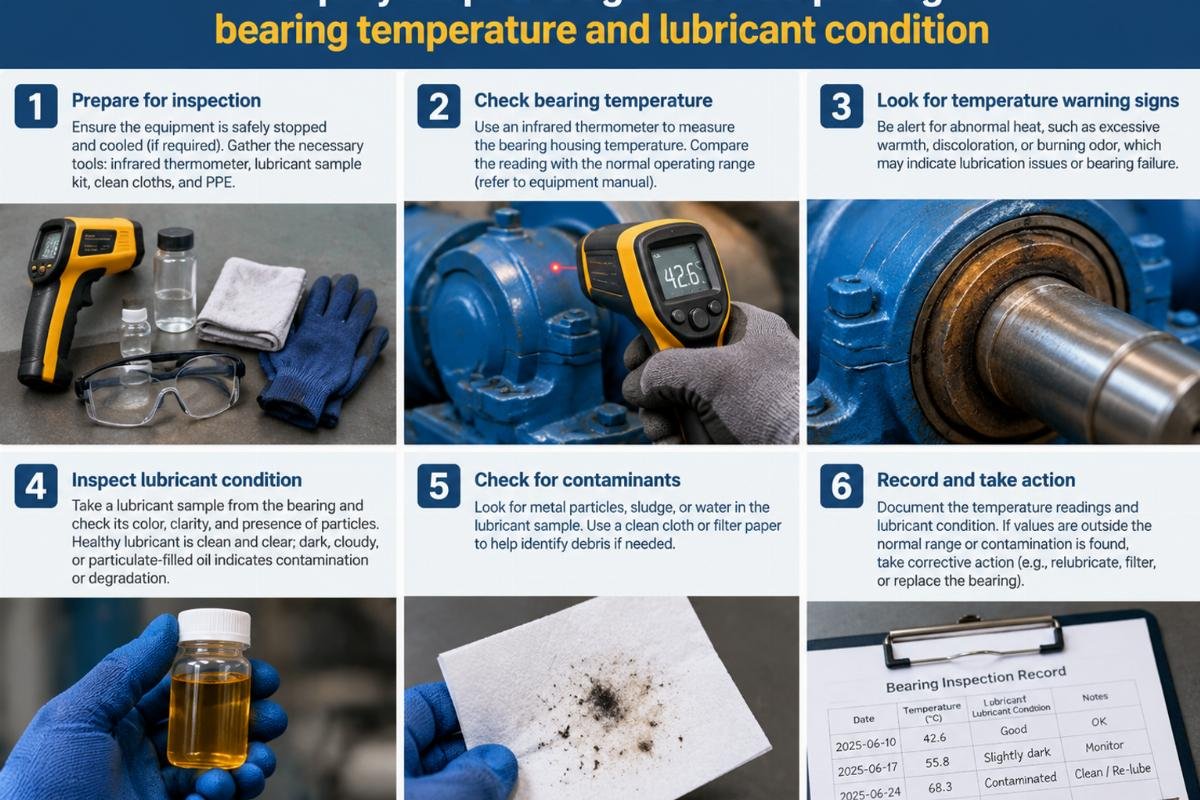
By systematically applying these steps, maintenance teams can differentiate between environmental heat and internally generated friction heat. This distinction is crucial for selecting the correct corrective action.
What Are the Hidden Causes of Bearing Overheating?
Overheating is rarely a standalone issue; it is usually a symptom of underlying mismatches in lubrication, load, or clearance.
Many operators assume that high ambient temperature is the primary culprit. In reality, poor lubrication practices generate the majority of internal heat. When grease is overfilled, it causes churning, which creates significant friction and heat buildup. Conversely, under-lubrication leads to direct metal contact. Both scenarios push the system far beyond Normal bearing operating temperature.
Another hidden cause is improper internal clearance. Bearings are manufactured with specific clearance classes (such as C3 or C4). If a bearing with standard clearance is installed in an application with significant thermal expansion, the internal space between the rolling elements and races diminishes as the metal heats up. This loss of clearance increases preload, leading to a rapid rise in temperature and eventual seizure. [NEED_CITE: impact of internal clearance on bearing operating temperature]
Load distribution also plays a critical role. Misalignment causes uneven load distribution, concentrating stress on a small section of the raceway. This localized stress generates intense heat, even if the overall load is within the bearing’s rated capacity.
| Cause | Thermal Impact | Detection Method |
|---|---|---|
| Over-lubrication | High heat from churning | Grease leakage, high housing temp |
| Under-lubrication | High heat from friction | Dry grease, noise, wear particles |
| Incorrect Clearance | Progressive heat rise | Vibration analysis, temperature trend |
| Misalignment | Localized hot spots | Thermal imaging, vibration spectrum |
Understanding these hidden causes allows for proactive maintenance. Instead of simply replacing the failed bearing, addressing the root cause ensures that the new unit operates within safe thermal limits.

How to Select the Right Bearing and Lubricant for High-Temp Environments?
Selecting the correct components involves matching material properties and lubricant chemistry to the specific thermal demands of the application.
When standard solutions fail, it is necessary to upgrade both the bearing construction and the lubrication strategy. For environments where Normal bearing operating temperature is consistently exceeded, consider bearings with cages made from high-temperature resistant materials such as brass or specialized polymers. These materials maintain their structural integrity better than standard steel cages under thermal stress.
Seal selection is equally important. Standard nitrile rubber seals degrade quickly at high temperatures. Switching to fluorocarbon (FKM) or polytetrafluoroethylene (PTFE) seals can significantly extend service life in hot zones. These materials offer superior resistance to heat and chemical degradation. [NEED_CITE: thermal resistance of different bearing seal materials]
Lubricant choice is the most critical factor. Synthetic base oils with high viscosity indices maintain their film strength better at elevated temperatures. Additionally, greases with high dropping points and oxidation inhibitors are essential for preventing breakdown. In extreme cases, solid lubricants or oil mist systems may be required to ensure consistent cooling and lubrication.
For industries like mining and steel production, where conditions are particularly harsh, specialized spherical roller bearings are often the best solution. These bearings are designed to handle heavy loads and misalignment while accommodating thermal expansion. Our technical team provides cross-brand selection support to help distributors and end-users identify the exact specifications needed for their unique operating conditions. By leveraging our extensive inventory of premium global brands and reliable domestic lines, we ensure that clients receive genuine, traceable products suited for their specific thermal challenges.

This targeted approach minimizes the risk of premature failure and reduces unplanned downtime. It transforms temperature management from a reactive troubleshooting task into a proactive design parameter.
Conclusion
Maintaining safe operating temperatures is fundamental to bearing longevity and equipment reliability.
By understanding the true limits of Normal bearing operating temperature, identifying hidden causes of overheating, and selecting appropriate materials and lubricants, operators can prevent catastrophic failures. This knowledge empowers distributors and MRO managers to make informed decisions that protect their assets and optimize performance.
Need a quote for the bearings in this article?
Send your part numbers and get price, stock and lead time within 4 hours.

Written by
authorEditor covering global sourcing, supplier verification, and industrial product knowledge. Content is compiled from manufacturer specifications, industry standards, and hands-on experience with international B2B buyers. Every article is fact-checked before publishing to help procurement professionals make informed decisions.
View all posts