Cement Plant Bearings for Kilns, Mills & Fans: Wholesale Supplier

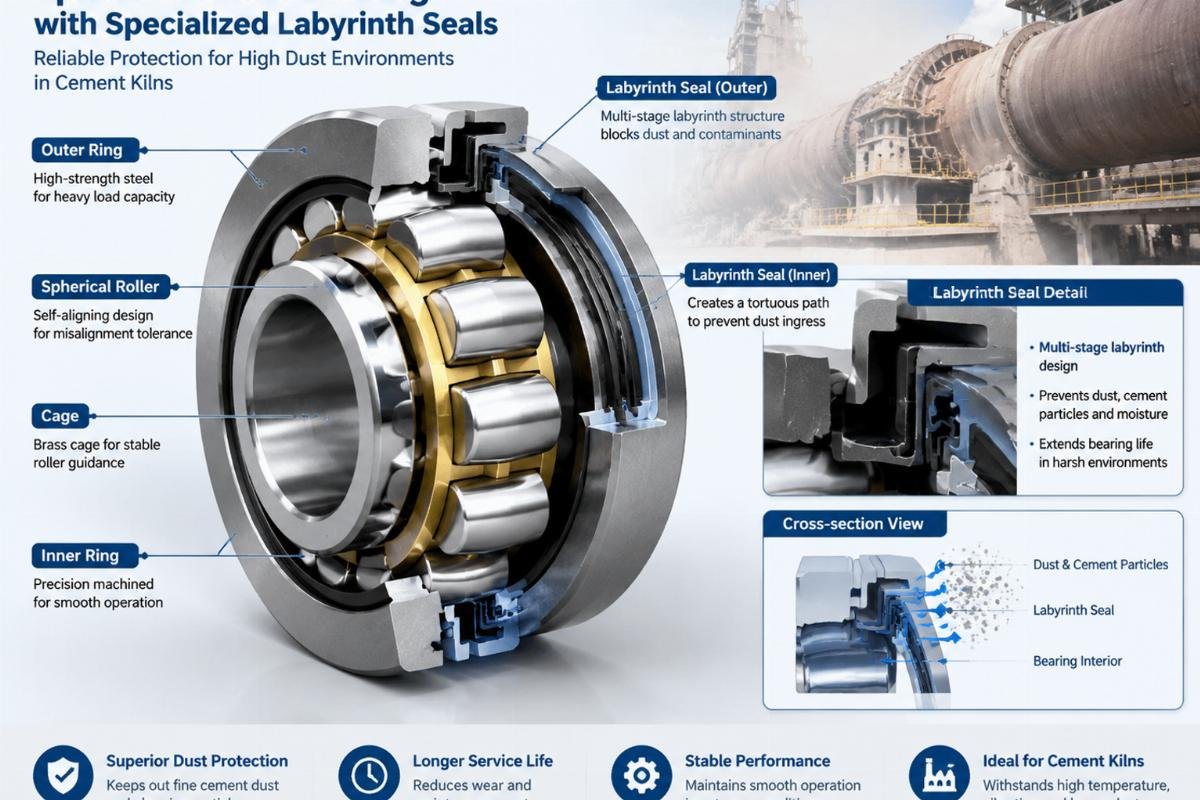
Cement Plant Bearings for Kilns, Mills & Fans: Wholesale Supplier
Higher load capacity does not guarantee longer bearing life in cement plants.
Selecting the right Cement Plant Bearings requires matching specific harsh conditions such as high temperature, abrasive dust, and heavy shock loads rather than relying solely on standard catalog specifications. Premature failures in kilns, mills, and fans are rarely due to material defects but stem from mismatched internal clearances, inadequate sealing against fine particulate matter, and improper lubrication intervals for thermal expansion.
I still remember the deafening roar of a rotary kiln in a Middle Eastern cement plant. The maintenance team had replaced the trunnion bearings with what they believed were premium-spec units, yet the new bearings seized within weeks. Standing beside the glowing shell, I realized the issue was not the brand or the basic load rating. The original equipment manufacturer’s standard seals could not withstand the ambient dust concentration, and the internal clearance was too tight for the extreme thermal expansion occurring during operation. This incident shifted my approach from simply matching part numbers to analyzing the actual operating environment. [NEED_CITE: common failure modes in heavy industry bearings per ISO 15243]
Understanding these nuances is critical for MRO operators and distributors who need to minimize unplanned downtime. The following sections break down the specific challenges for key cement plant applications and how proper selection mitigates these risks.
Why Do Kiln Trunnion Bearings Fail Prematurely?
Standard seals and generic clearances are insufficient for the combined stress of heat and dust in rotary kilns.
The rotary kiln is the heart of cement production, operating at high temperatures while rotating slowly under immense weight. The trunnion bearings support this load, but they face a unique enemy: fine, abrasive clinker dust that penetrates even minor seal gaps. When I inspected the failed bearings at that Middle Eastern plant, the rollers were jammed not because of overload, but because dust had bypassed the standard rubber seals, mixed with the grease, and formed an abrasive paste. This paste increased friction, generated excessive heat, and eventually caused the rollers to lock up.
Thermal expansion is another silent killer. As the kiln shell heats up, it expands significantly. If the bearing internal clearance is not selected to accommodate this expansion, the rolling elements become pre-loaded, leading to rapid overheating and cage deformation. Many buyers mistakenly choose bearings with standard C3 clearance, assuming it is sufficient. However, in high-temperature zones, a C4 or even custom clearance may be required to maintain optimal running conditions. [NEED_CITE: thermal expansion coefficients and bearing clearance selection guidelines]
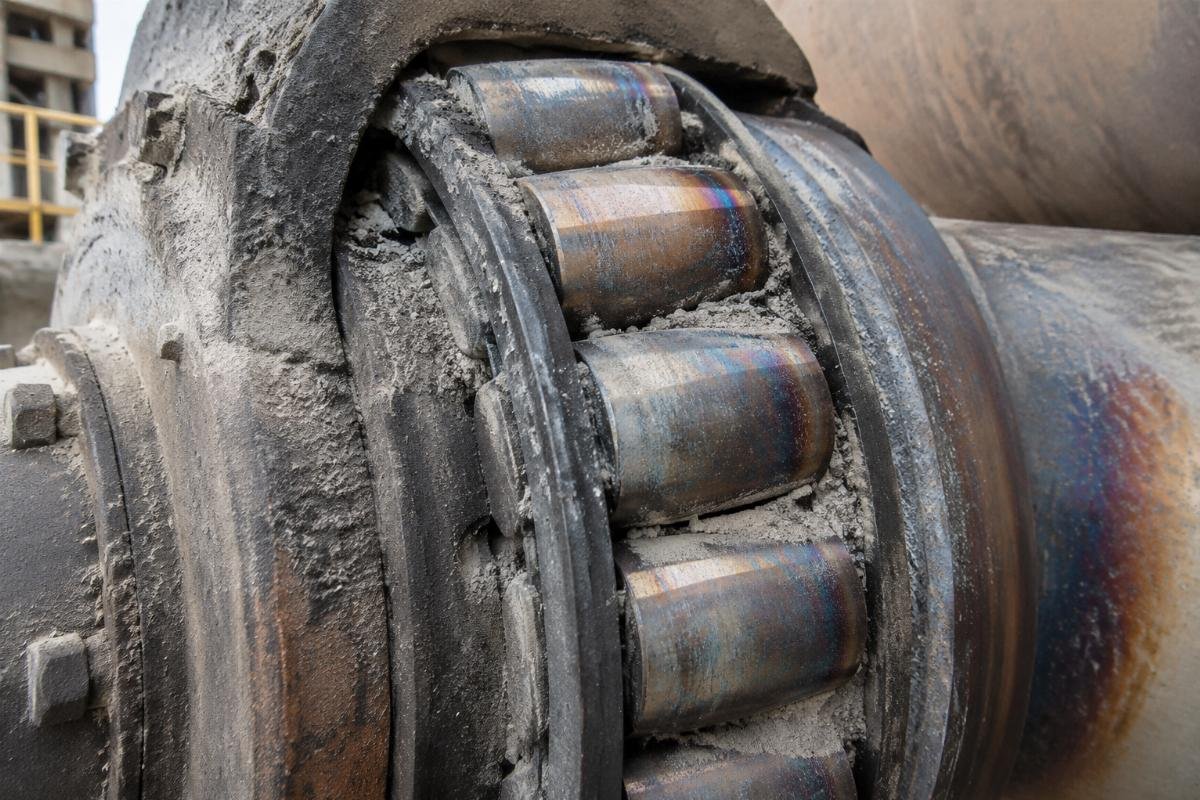
To prevent such failures, the focus must shift to sealing technology and clearance calculation. Labyrinth seals or custom-designed protective covers are often necessary to create a physical barrier against dust without generating excessive friction heat. Furthermore, lubrication intervals must be adjusted based on operating temperature, as high heat accelerates grease oxidation and reduces its viscosity. Selecting Cement Plant Bearings for kilns thus demands a holistic view of the thermal and environmental profile, not just the static load rating.
How to Select Bearings for High-Load Cement Mills?
Shock loads in cement mills require optimized roller profiles and robust cage designs rather than just higher dynamic load ratings.
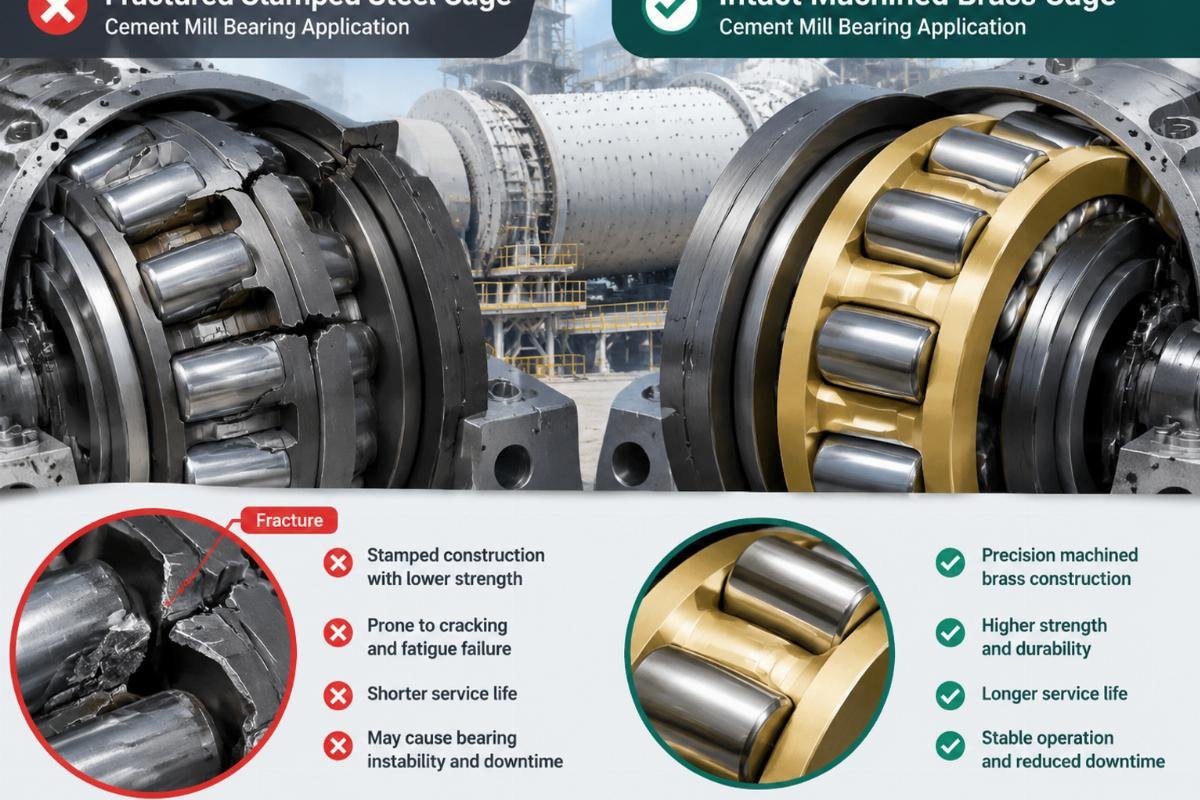
Cement mills, whether ball mills or vertical roller mills, subject bearings to severe shock loads and vibration. The grinding process involves crushing hard clinker and raw materials, creating irregular force patterns that standard bearings may not withstand. A common failure mode I have observed is cage fracture. In one case, a mill operator reported repeated bearing failures despite using brands known for high load capacity. Upon analysis, we found that the standard stamped steel cages could not handle the intermittent high-impact forces, leading to fatigue cracks and eventual breakup.
The solution lies in selecting bearings with machined brass or steel cages, which offer superior strength and guidance under heavy shock conditions. Additionally, the roller profile plays a crucial role. Optimized logarithmic or modified roller profiles help distribute the load more evenly across the contact area, reducing edge stresses that can initiate spalling. [NEED_CITE: dynamic load rating adjustment methods for shock load applications]
Maintenance intervals also differ significantly for mill applications. Due to the heavy loads and potential contamination from grinding media, frequent lubrication and condition monitoring are essential. Vibration analysis can detect early signs of cage damage or roller surface distress before catastrophic failure occurs. For distributors and end-users, understanding these specific requirements ensures that the Cement Plant Bearings supplied are not just generic replacements but engineered solutions for high-impact environments.
What Are the Hidden Risks in Fan Bearing Applications?
Vibration and misalignment in induced draft fans demand precise radial clearance and mounting accuracy to prevent premature wear.
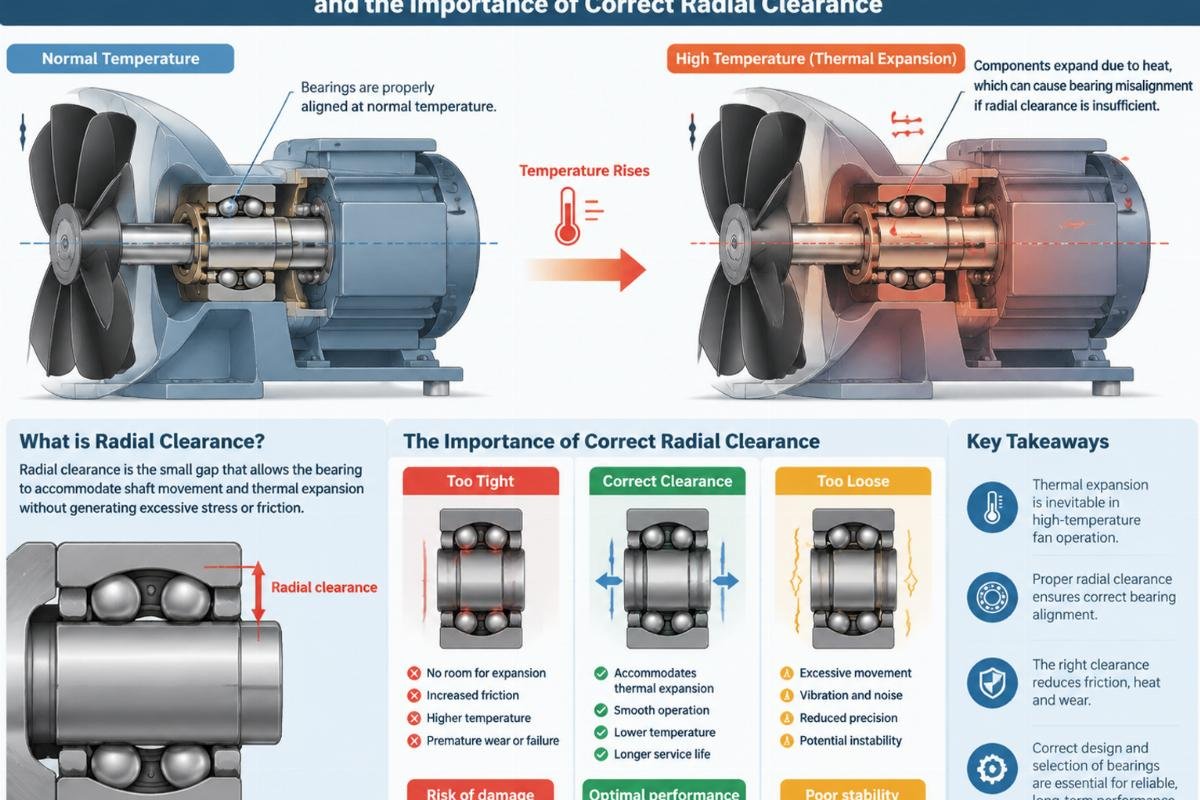
Induced draft (ID) fans operate at higher speeds compared to kilns and mills, making them sensitive to imbalance and misalignment. The primary risk here is not just load but vibrational stress and thermal growth. Fans experience significant temperature changes between startup and full operation, causing the shaft and housing to expand at different rates. If the bearing radial clearance is not correctly matched to this thermal behavior, it can lead to preload issues or excessive play, both of which accelerate wear.
I once consulted for a plant where ID fan bearings were failing every few months. The root cause was not the bearing quality but the mounting practice. The bearings were mounted with excessive interference fit on the housing, restricting their ability to float and accommodate thermal expansion. This constraint created internal stresses that led to early fatigue. Correcting the fit tolerance and selecting bearings with appropriate radial clearance classes resolved the issue. [NEED_CITE: ISO standards for bearing mounting and fits in high-speed applications]
Vibration limits must also be strictly monitored. Excessive vibration indicates imbalance, misalignment, or bearing damage. Using bearings with enhanced stability features, such as optimized internal geometry and high-precision manufacturing, helps mitigate these risks. For Cement Plant Bearings in fan applications, the focus should be on precision, proper fit, and vibration control to ensure long-term reliability.
How to Optimize MRO Sourcing for Cement Plant Bearings?
Genuine mixed-brand sourcing and technical support minimize downtime by ensuring the right bearing is available when needed.
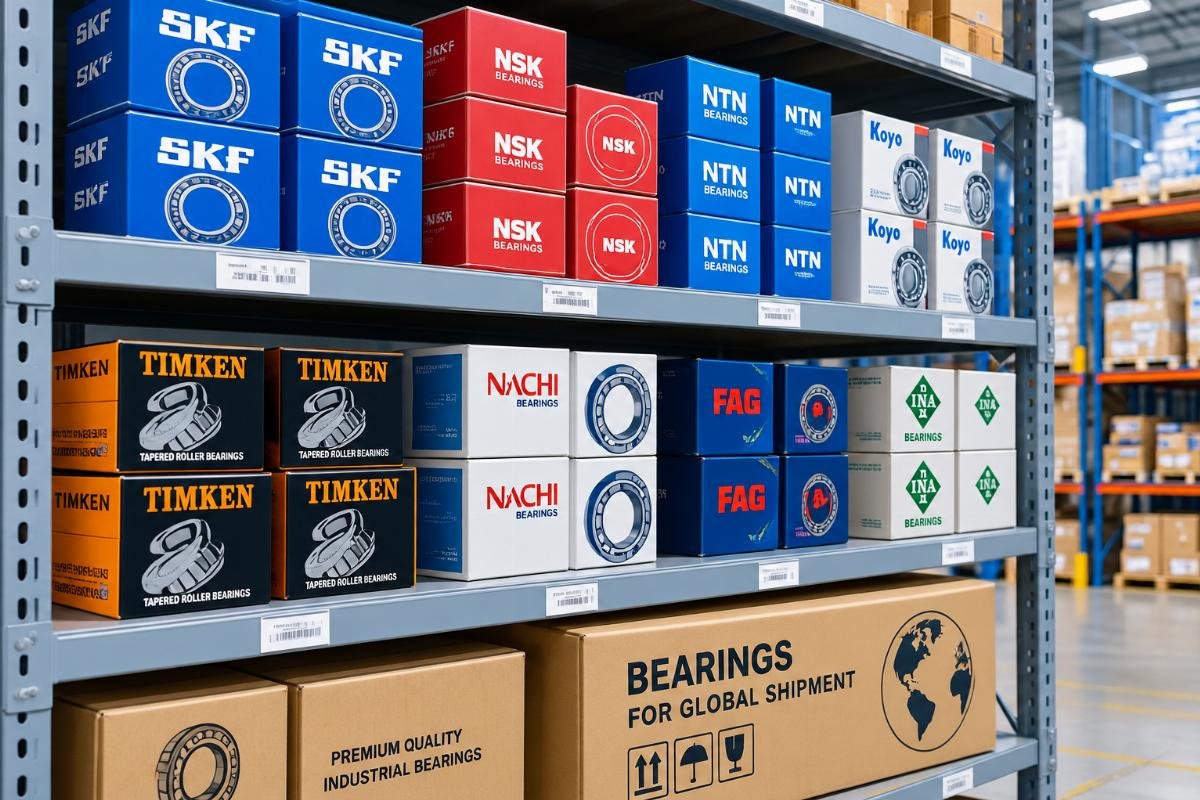
Sourcing bearings for cement plants is complex due to the variety of brands and specifications used in different equipment. Plants often operate machinery from multiple OEMs, each specifying different bearing brands such as SKF, FAG, NSK, or TIMKEN. Managing inventory for all these variants can be challenging and costly. A single missing bearing can halt production, resulting in significant financial loss.
This is where a professional global supplier adds value. By offering genuine bearings across all mainstream international brands, along with reliable domestic alternatives, suppliers can provide a one-stop solution for mixed-brand requirements. This approach simplifies procurement, reduces inventory complexity, and ensures that authentic products with complete traceability documentation are delivered. [NEED_CITE: importance of supply chain traceability for industrial spare parts]
Technical support is equally critical. Suppliers who offer cross-brand equivalent model consultation and failure analysis services help plants make informed decisions. Instead of just replacing a failed bearing with the same part, engineers can analyze the failure mode and recommend improvements, such as upgraded seals or different clearance classes. This proactive approach transforms MRO sourcing from a transactional activity into a strategic partnership that enhances plant reliability. For those seeking Cement Plant Bearings, partnering with a supplier who understands these technical nuances ensures that every replacement contributes to longer equipment life and reduced operational costs.
Conclusion
Effective bearing selection in cement plants hinges on understanding specific operational stresses rather than relying on generic specifications.
From kiln trunnions to mill rollers and fan shafts, each application presents unique challenges related to heat, dust, shock loads, and vibration. Addressing these through proper clearance selection, specialized sealing, and robust cage designs prevents premature failures. Leveraging expert sourcing and technical support further ensures that the right Cement Plant Bearings are available to maintain continuous production and optimize maintenance strategies.
Need a quote for the bearings in this article?
Send your part numbers and get price, stock and lead time within 4 hours.

Written by
authorEditor covering global sourcing, supplier verification, and industrial product knowledge. Content is compiled from manufacturer specifications, industry standards, and hands-on experience with international B2B buyers. Every article is fact-checked before publishing to help procurement professionals make informed decisions.
View all posts

