6206 Bearing Dimensions, Load Ratings & Replacement Wholesale Supplier

6206 Bearing Dimensions, Load Ratings & Replacement Wholesale Supplier
Matching outer and inner diameters is not enough to guarantee a functional replacement.
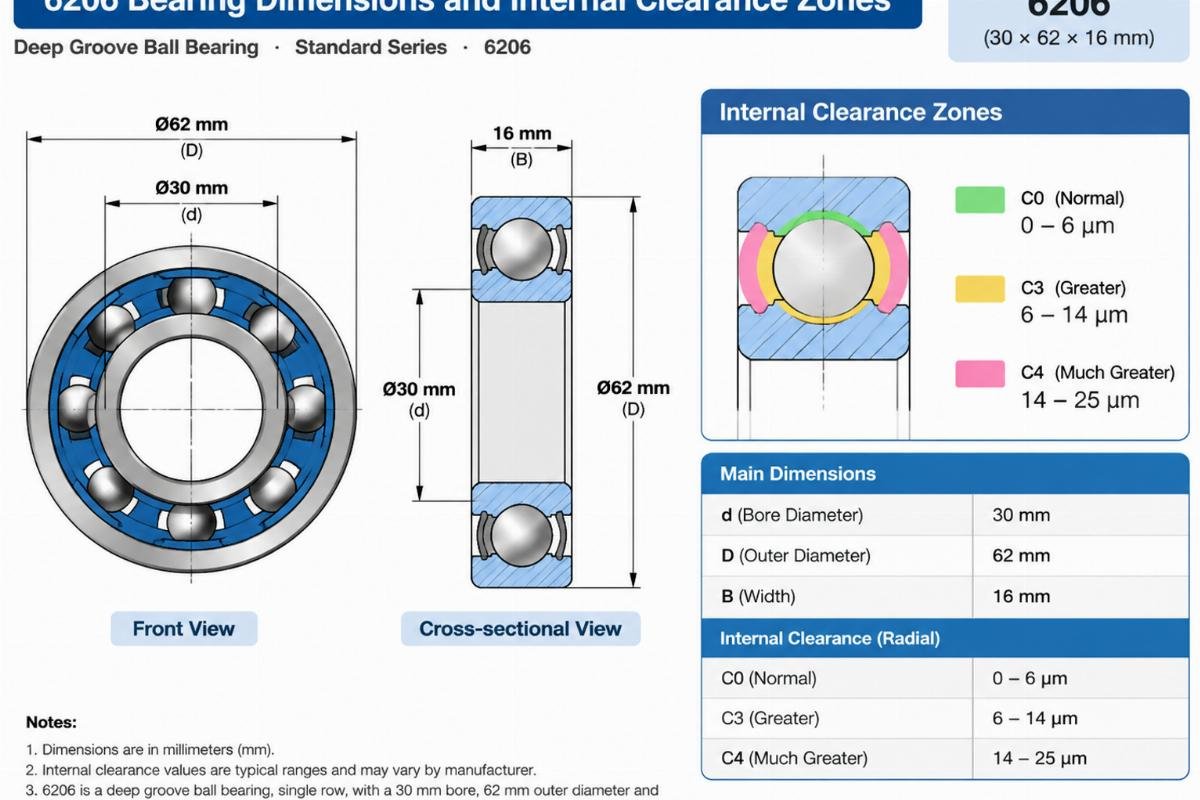
A 6206 bearing is defined by its standard dimensions of 30 mm bore, 62 mm outer diameter, and 16 mm width, but successful replacement depends critically on verifying internal clearance classes such as C3 and selecting appropriate cage materials for specific operational speeds and thermal conditions.
I still remember the humidity in the hall during that trade fair in Hanover. A buyer from Germany was looking for a direct equivalent for a motor application. I recommended a domestic unit that matched the basic envelope perfectly. The dimensions were identical, the steel looked polished, and the price was attractive. We shipped it. Three months later, the client called. The motor had seized. The bearing hadn’t just failed; it had welded itself to the shaft due to excessive heat. I had ignored the internal clearance. The original specification required a C3 clearance to handle thermal expansion, but I had supplied a standard clearance unit because I only checked the outside measurements. That failure cost me more than just the order; it cost me the trust built over years. Since then, I never look at a 6206 bearing without first asking about the operating temperature and the required clearance class. [NEED_CITE: ISO 492 dimensional tolerance standards]
Understanding these internal variables is what separates a parts supplier from a technical partner. Let’s break down exactly what you need to verify before placing your next order.
What Are the Exact Dimensions of a 6206 Bearing?
The basic boundary dimensions are standardized globally, but tolerance grades dictate fit.
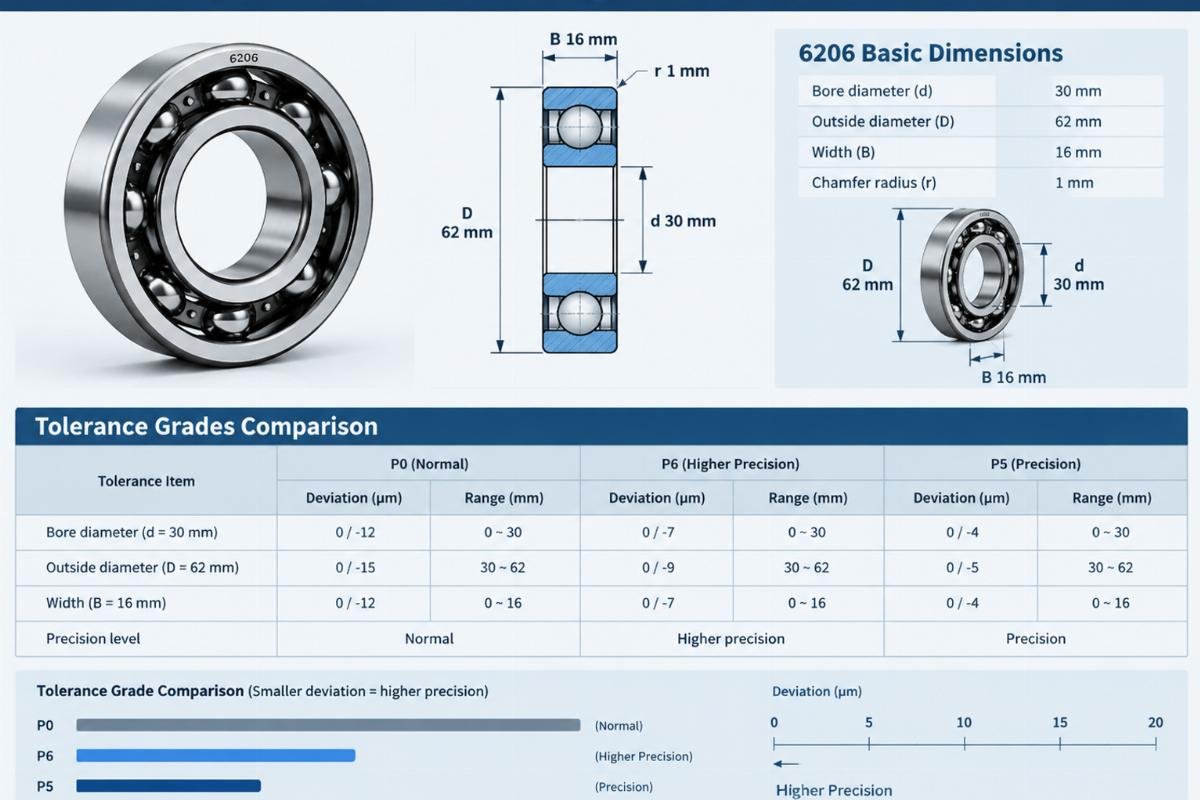
When sourcing a 6206 bearing, the primary identifiers are the bore diameter of 30 mm, the outer diameter of 62 mm, and the width of 16 mm. These figures are consistent across major manufacturers like SKF, FAG, NSK, and NTN. However, relying solely on these three numbers is a common pitfall for MRO operators. The critical differentiator lies in the tolerance class. Most industrial applications require Normal tolerance (P0), but precision machinery may demand P6 or higher. [NEED_CITE: ABMA tolerance class definitions]
If you are replacing a bearing in a high-precision spindle or a tight-fit housing, checking the radial runout and side face runout is essential. A bearing that meets the dimensional specs but fails the geometric tolerance checks will cause vibration and premature wear. For general industrial use, ensuring the dimensions align with ISO 492 standards is sufficient, but for critical assets, requesting inspection reports for specific tolerance grades is a necessary step.
| Parameter | Standard Value | Tolerance Note |
|---|---|---|
| Bore Diameter | 30 mm | Must match shaft tolerance |
| Outer Diameter | 62 mm | Must match housing tolerance |
| Width | 16 mm | Critical for axial positioning |
| Tolerance Class | Normal (P0) | Verify if P6/P5 is required |
Always confirm whether the application requires a standard fit or an interference fit. This decision impacts not just the bearing selection but also the installation method. Using a hammer on a precision-grade 6206 bearing can destroy its internal geometry before it even starts running.
How Do Load Ratings Impact 6206 Bearing Lifespan?
Dynamic load capacity determines fatigue life, while static load capacity prevents permanent deformation.
The load rating is not just a number on a datasheet; it is the predictor of how long the bearing will last under specific conditions. The dynamic load rating (C) indicates the load a 6206 bearing can endure for one million revolutions with a 90% reliability factor. The static load rating (Co) represents the maximum load the bearing can withstand when stationary without causing permanent deformation of the rolling elements. [NEED_CITE: ISO 281 load rating calculation methods]
In heavy-load applications, such as mining crushers or agricultural gearboxes, exceeding the static load limit even briefly can create indentations on the raceways. These indentations become stress concentrators, leading to spalling and early failure. Conversely, in high-speed applications, the dynamic load rating is the key metric. If the actual load exceeds the calculated dynamic capacity, the fatigue life drops exponentially.
Consider a case where a regional distributor supplied bearings for a conveyor system. The client selected a 6206 bearing based on its dynamic load rating alone, ignoring the shock loads present during startup. The bearings failed repeatedly within weeks. By switching to a bearing with a higher static load capacity and verifying the application’s shock factor, the lifespan extended noticeably. It wasn’t about getting a “stronger” bearing; it was about matching the right load type to the right rating.

When evaluating replacements, always calculate the equivalent dynamic load considering both radial and axial forces. A 6206 bearing is a deep groove ball bearing, capable of handling moderate axial loads, but it is not designed for heavy thrust applications. Misinterpreting this capability is a frequent cause of unexpected downtime.
Why Does Internal Clearance Matter in 6206 Replacements?
Internal clearance dictates thermal stability and prevents seizure in high-temperature environments.
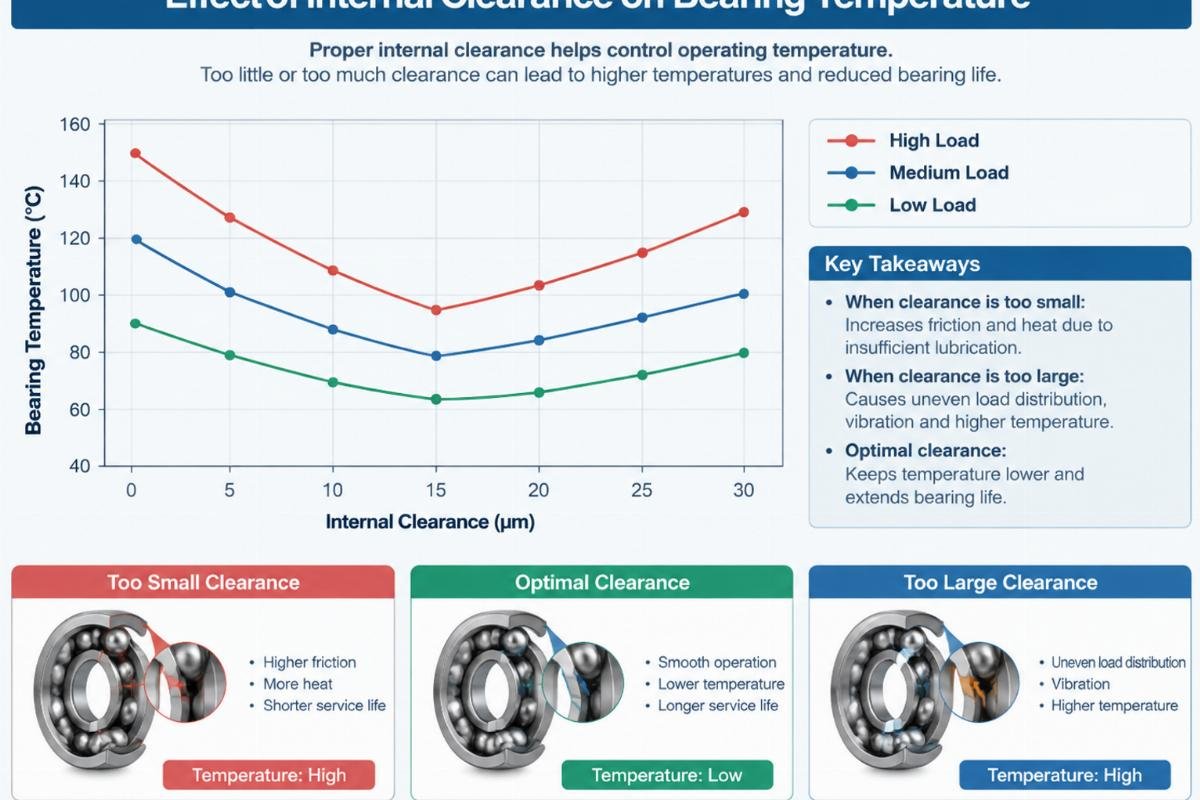
This is the lesson I learned the hard way in Hanover. Internal clearance is the space between the rolling elements and the raceways. Standard clearance is suitable for most room-temperature applications. However, when a bearing operates in a hot environment or at high speeds, the inner ring expands more than the outer ring due to heat transfer from the shaft. If there is no extra space (clearance) to accommodate this expansion, the bearing preloads itself, generating excessive heat and eventually seizing. [NEED_CITE: ISO 5753 internal clearance classes]
For motors, pumps, and fans, a C3 clearance is often specified. C3 offers greater internal space than standard clearance, allowing for thermal expansion without inducing harmful preload. In extreme cases, such as steel mill applications, C4 clearance might be required. Using a standard clearance 6206 bearing in a C3-specified application is a recipe for disaster, as seen in my earlier experience. The failure wasn’t due to poor quality; it was due to incorrect specification.
| Clearance Class | Application Context | Thermal Suitability |
|---|---|---|
| C2 | Less than Standard | Low temperature, quiet operation |
| Normal | Standard | General industrial use |
| C3 | Greater than Standard | High temperature, high speed |
| C4 | Much Greater | Extreme thermal expansion |
Always check the original equipment manufacturer’s documentation for the required clearance class. If the documentation is lost, analyze the operating conditions. High-speed motors and high-temperature environments almost always require C3. Ignoring this detail turns a simple replacement into a recurring maintenance nightmare.
How to Choose the Right Cage Material for 6206?
Cage material influences speed limits, noise levels, and chemical resistance.
The cage holds the rolling elements in place and guides them. While often overlooked, the cage material is critical for performance. Steel cages are robust and suitable for high-load, low-to-medium speed applications. They are durable but can generate more noise and have lower speed limits compared to polymer cages. [NEED_CITE: Bearing cage material properties guide]
Polymer cages, typically made from nylon or polyamide, are lighter and offer better sliding properties. This allows for higher operating speeds and reduced noise. They are ideal for electric motors and appliances where quiet operation is valued. However, polymer cages have temperature limits and can be susceptible to certain chemicals. In a high-speed application, swapping a steel cage for a polymer one can significantly reduce vibration and extend service life by reducing friction.
A European wind farm operator once faced issues with noise and vibration in their gearbox auxiliary drives. They were using standard steel-caged 6206 bearing units. By switching to polymer-caged equivalents, they noticed a substantial reduction in noise and a smoother operation profile. The change didn’t alter the load capacity, but it optimized the bearing for the specific speed and environmental conditions.
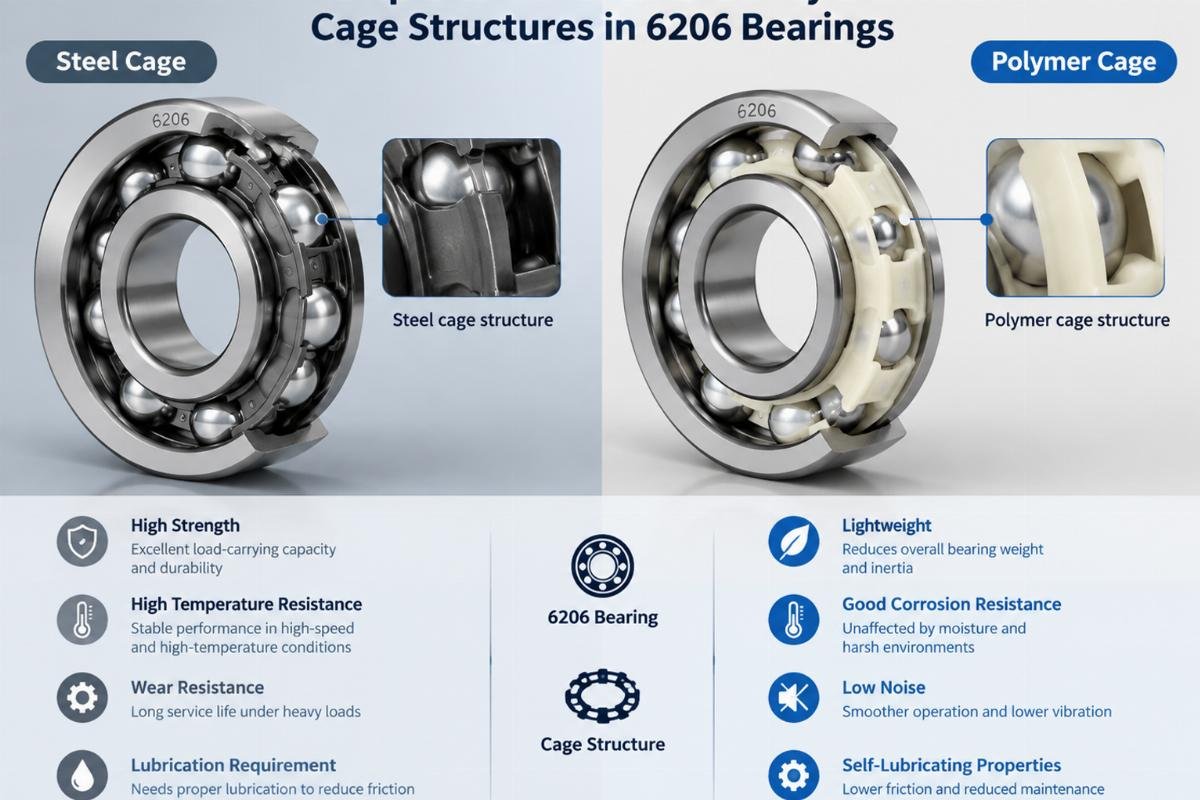
When sourcing replacements, specify the cage material if the application involves high speeds or sensitive acoustic environments. Do not assume that all 6206 bearing units are interchangeable in this regard. The cage is an integral part of the bearing’s performance ecosystem.
What Are the Best Practices for Cross-Brand 6206 Replacement?
Verification of traceability and technical parameters supersedes simple model number matching.
Cross-brand replacement is common in MRO scenarios, but it carries risks if not managed correctly. A model number like 6206 is universal, but the manufacturing standards, material purity, and quality control processes vary between brands. SKF, FAG, NSK, and domestic brands all produce 6206 bearings, but their internal specifications may differ slightly in terms of grease type, cage design, and tolerance adherence. [NEED_CITE: Cross-brand bearing equivalence guidelines]
To ensure a successful replacement, request traceability documentation. Genuine bearings come with batch numbers and certificates of conformity. This ensures that the bearing meets the claimed standards. Avoid suppliers who cannot provide proof of origin. In our global supply chain, we maintain strict traceability for all brands, ensuring that every 6206 bearing shipped is genuine and verifiable. This practice protects buyers from counterfeit products that may look identical but fail under load.
Additionally, consider the supply chain flexibility. For large projects, mixing brands in a single container shipment can optimize costs without compromising quality, provided each brand meets the technical requirements. We support such mixed-brand sourcing, offering technical consultation to verify equivalences before shipment. This approach allows distributors to maintain inventory diversity while ensuring technical compliance.
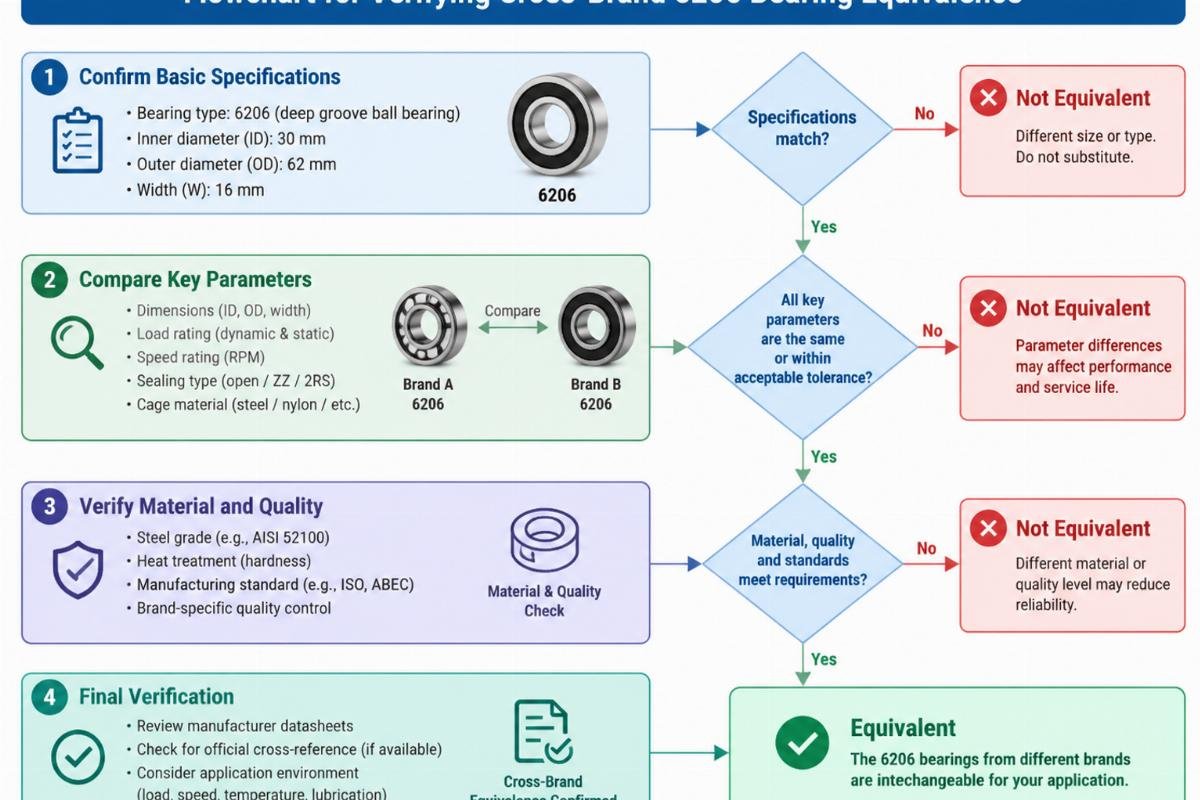
Always perform a visual and dimensional inspection upon receipt. Check for proper marking, packaging integrity, and smooth rotation. These simple steps can prevent the installation of defective or counterfeit units. Trust, but verify.
Conclusion
Selecting the right 6206 bearing requires looking beyond basic dimensions to internal clearance and cage material.
Successful replacement hinges on understanding the specific operational demands of the application. By verifying clearance classes, load ratings, and cage materials, you can prevent premature failures and ensure reliable performance. Always prioritize traceability and technical verification over simple model number matching to safeguard your equipment and reputation.
Need a quote for the bearings in this article?
Send your part numbers and get price, stock and lead time within 4 hours.

Written by
authorEditor covering global sourcing, supplier verification, and industrial product knowledge. Content is compiled from manufacturer specifications, industry standards, and hands-on experience with international B2B buyers. Every article is fact-checked before publishing to help procurement professionals make informed decisions.
View all posts

